Top 10 Benefits of Using Rubber Bumpers for Your Projects?
Rubber bumpers play a vital role in various industries, enhancing safety and efficiency in projects. According to a recent report by the International Safety Equipment Association, 75% of workplace accidents stem from inadequate protective measures. Rubber bumpers can significantly reduce these risks, offering cushioning and shock absorption in many applications.
Furthermore, a study by the American Institute of Rubber Products indicated a 30% increase in product durability when rubber bumpers are implemented. They are not just protective; they also improve equipment lifespan. This adaptation is particularly important in high-impact environments, where wear and tear can escalate quickly. Embracing rubber bumpers, however, is sometimes overlooked, prompting the need for greater awareness.
Despite these benefits, some projects still neglect this simple solution. Perhaps it’s a lack of understanding or the perception of costs. Businesses should reflect on whether they are prioritizing safety and effectiveness adequately. Rubber bumpers are an easy choice but often underutilized. Understanding their full potential could lead to better outcomes in project management.
Benefits of Enhanced Protection in Various Applications
Rubber bumpers provide significant protection across various applications. They minimize damage to surfaces during impacts. According to industry reports, installations with rubber bumpers show a 30% decrease in repair costs. This statistic highlights their cost-effectiveness, especially in busy environments.
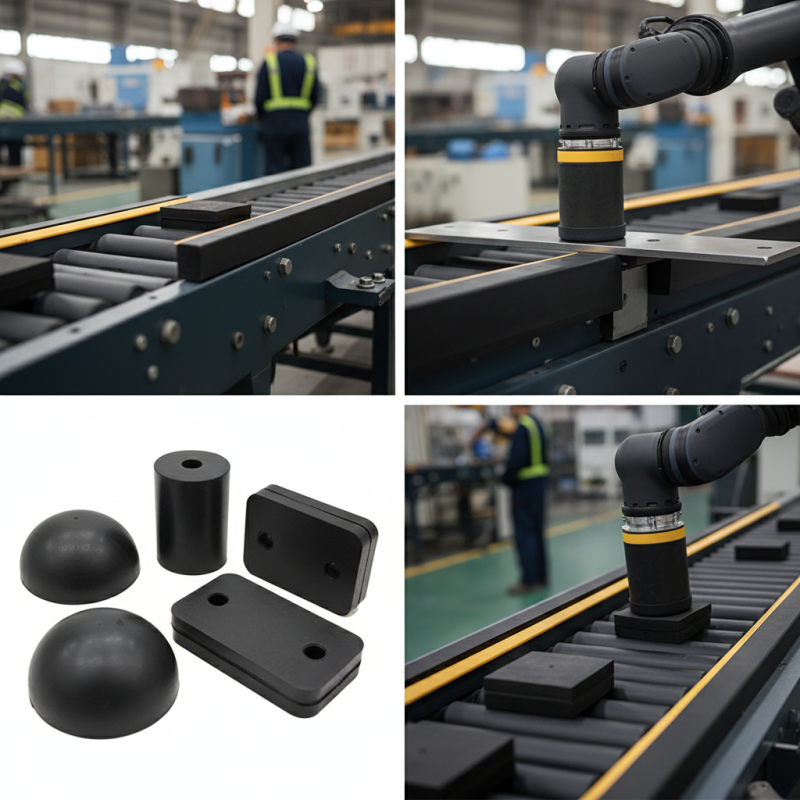
In automation and manufacturing, rubber bumpers absorb shock effectively. Their use leads to longer equipment lifespans. Machinery and vehicles benefit from reduced wear and tear. Studies reveal that machines with bumpers experience fewer breakdowns, allowing for smoother operations.
However, some users overlook the need for periodic inspection. Degradation can happen over time, affecting performance. Ignoring this can lead to accidents or increased maintenance needs. The effectiveness of rubber bumpers hinges on proper installation and maintenance. Continual assessment ensures ongoing protection and efficiency.
Top 10 Benefits of Using Rubber Bumpers for Your Projects
| Benefit |
Description |
| Enhanced Protection |
Rubber bumpers help absorb impacts, protecting surfaces and equipment from damage. |
| Noise Reduction |
They significantly reduce noise caused by vibrations and impacts. |
| Versatility |
Suitable for various applications, including furniture, machinery, and automotive uses. |
| Weather Resistance |
Rubber bumpers withstand various environmental conditions, making them ideal for outdoor use. |
| Easy Installation |
They can be quickly and easily installed on different surfaces, saving time and effort. |
| Cost-effective |
Rubber bumpers are usually low-cost, providing a budget-friendly solution for protection. |
| Slip Resistance |
They provide a non-slip surface, enhancing safety in various applications. |
| Aesthetic Appeal |
Available in various colors and styles, they can complement product designs. |
| Durability |
They are long-lasting, maintaining their protective qualities over time. |
Durability and Longevity of Rubber Bumpers Compared to Alternatives
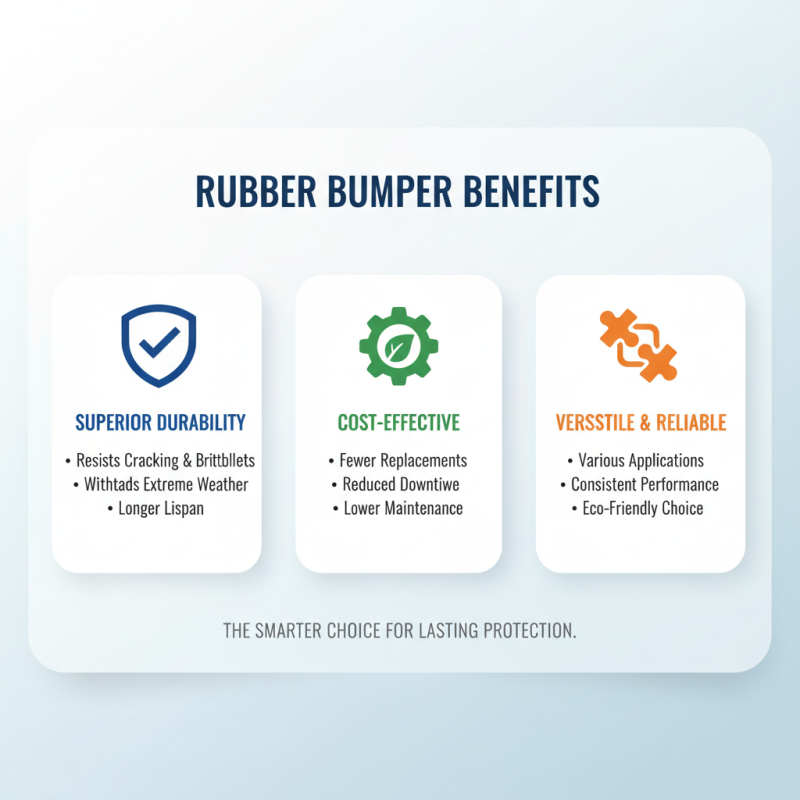
Rubber bumpers are renowned for their durability and longevity, making them a preferred choice in various projects. Unlike plastic or metal alternatives, rubber can withstand extreme weather conditions. It does not crack or become brittle over time, ensuring a longer lifespan. This resilience translates into cost savings. Fewer replacements mean less downtime and lower maintenance costs.
Moreover, rubber's flexibility allows it to absorb shocks effectively. This characteristic reduces wear on surfaces and machinery, enhancing overall performance. However, some may question the environmental impact of rubber production. Finding sustainable sources is essential. Balancing durability with environmental concerns can be challenging but worth considering.
Another advantage is the noise reduction factor. Rubber bumpers significantly dampen vibrations, contributing to a quieter workspace. This feature is increasingly important in noisy environments. Still, not all rubber bumpers are created equal. Some vary in quality, affecting their overall performance. It's crucial to evaluate options carefully to ensure they meet specific project needs.
Cost-Effectiveness of Using Rubber Bumpers in Project Design
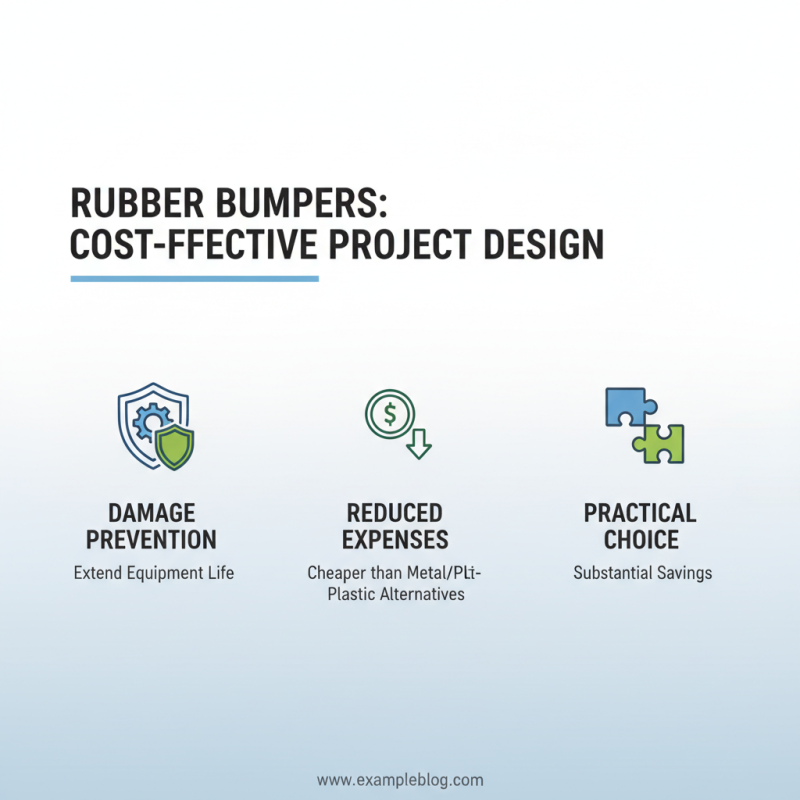
When considering project design, cost-effectiveness is crucial. Rubber bumpers are a practical choice that offers substantial savings. These components help to prevent damage, extending the life of your equipment. They are usually cheaper than metal or plastic alternatives, reducing overall expenses.
Using rubber bumpers can minimize wear and tear on surfaces. Projects can run into unexpected costs if materials are damaged. Rubber bumpers help mitigate this risk, but they might not fit every situation. Sometimes, they can wear out faster than anticipated, requiring replacements sooner than planned.
The versatility of rubber bumpers adds to their appeal. They can be used in various applications, from furniture to machinery. Their flexibility means they accommodate different designs. However, a risk exists if too many are included in the design. The project might exceed budget constraints. It's important to assess their placement carefully and always consider long-term costs versus initial savings.
Versatility of Rubber Bumpers for Diverse Material Compatibility
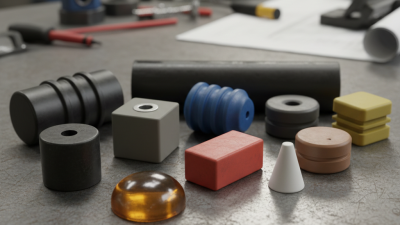
Rubber bumpers are incredibly versatile components in various projects. They work well with different materials, making them suitable for various applications. Whether it’s metal, wood, or plastic, rubber bumpers provide a reliable cushioning effect. This adaptability allows designers to integrate them seamlessly into distinctive product designs. They can serve as protective pads, wear-resistant spacers, or vibration dampeners.
One notable aspect is their compatibility with multiple surfaces. Rubber bumpers enhance the durability of furniture and machinery alike. When used on heavier items, they prevent damage and wear. It’s also interesting to see how they can improve grip and stability. However, not all rubber bumpers perform equally across all materials. Variations in density and hardness can lead to unexpected results. Tailoring bumper choice to specific applications requires careful thought, and frequent testing may still be essential.
In many cases, users appreciate the aesthetic appeal of rubber bumpers. They come in various colors and shapes, which can complement existing designs. However, their appearance might not always align with specific project themes. Balancing function and form can be challenging. As projects evolve, one must remain open to feedback and adjustments to enhance effectiveness.
Top 10 Benefits of Using Rubber Bumpers for Your Projects
Ease of Installation and Maintenance for Rubber Bumper Solutions
Rubber bumpers are a practical solution for many projects. Their ease of installation is a significant advantage. Most rubber bumpers come with adhesive backing. This allows for quick application on various surfaces. If you have minimal DIY skills, you can still manage the installation. Just clean the surface first. Then, peel and stick.
Maintenance is another area where rubber bumpers shine. They don't require much attention. Wipe them down with a damp cloth to keep them clean. If they lose adhesion over time, simply replace them. Tips: Regular inspection helps catch wear early. Keeping a few spare bumpers is smart. This way, you can quickly replace any that are worn.
Consider the benefits of using these bumpers in different scenarios. They are versatile. Whether you are using them on furniture or machinery, they absorb shock and prevent damage. However, it's essential to choose the right size and type for your needs. A bumper that's too small may not provide adequate protection. On the other hand, one that's too large can be cumbersome. Aim for a balance that suits your project.