Leave Your Message

How to Choose a Backlit Silicone Keymat in 2026?

Choosing a Backlit Silicone Keymat in 2026 requires more than comparing brightness or unit price. It demands evidence, testing, and a clear understanding of the operating environment. Grand View Research valued the global human-machine interface market at approximately USD 5.65 billion in 2023. Its report also forecasts continued growth through 2030. MarketsandMarkets identifies industrial automation, medical equipment, and transportation as important HMI application areas. These sectors need durable, readable, and cleanable controls.

The details matter. Examine silicone hardness, key travel, light uniformity, legend durability, and connector design. A keymat may look bright on a showroom table, yet show uneven halos inside a dark control panel. That assumption can fail. Ask suppliers for photometric data, operating-temperature results, chemical-resistance testing, and sample units. Check whether the material supports flame-retardancy requirements, including relevant UL 94 classifications. Review ingress-protection needs against IEC 60529 when moisture or dust is expected.

Don Norman, a leading human-centered design expert, states, “Design is really an act of communication.” That principle applies directly here. A tactile dome should confirm activation without excessive force. A symbol should remain legible after repeated cleaning. A backlight should guide the hand, not distract the operator. The best choice balances feel, visibility, sealing, service life, and production consistency. It is tempting to select the cheapest molded silicone option. Long-term field reliability may prove otherwise. Always validate the final design with real users, real gloves, and realistic lighting. Reports provide direction, not certainty. Supplier claims still require careful verification.
How to Choose a Backlit Silicone Keymat in 2026?

What Is a Backlit Silicone Keymat?

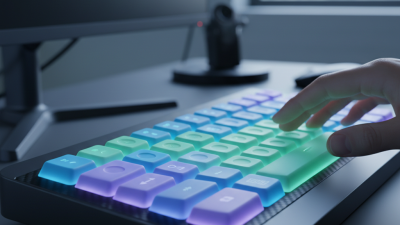
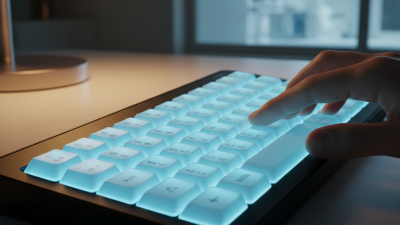
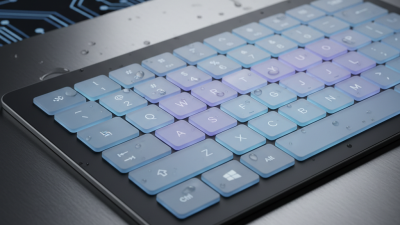
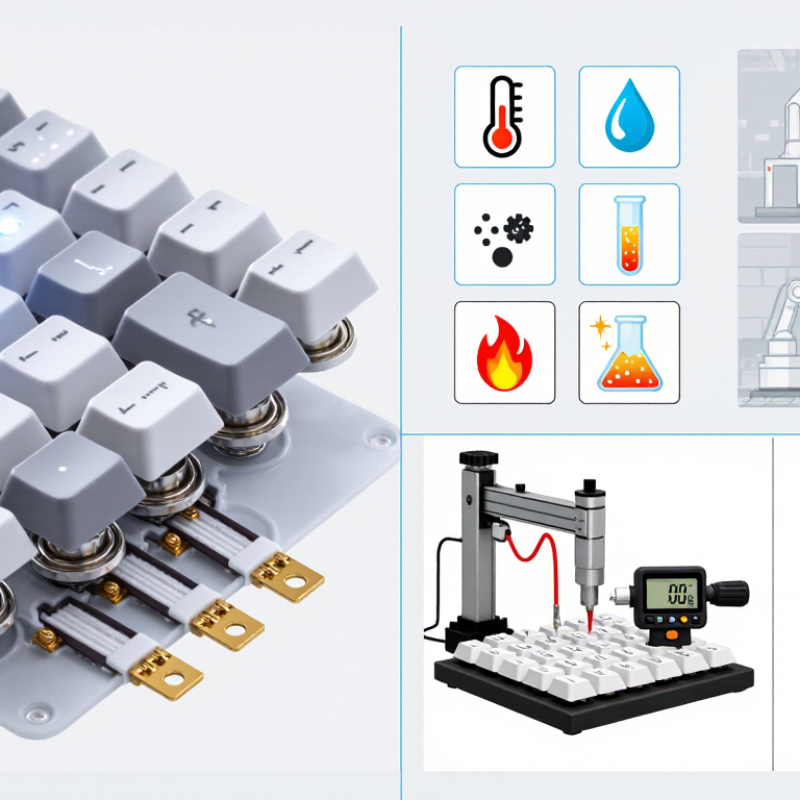
A backlit silicone keymat is a flexible control surface with molded silicone keys and integrated lighting. It sits above a printed circuit board, allowing users to press buttons without exposing delicate electronics. Each key usually includes a conductive carbon pill that closes an electrical circuit when pressed. Small LEDs, light channels, or a light-diffusing layer illuminate symbols in dim environments.

Silicone provides a soft, quiet touch and resists dust, moisture, and repeated handling. Its texture can also improve grip when users wear gloves. In practical testing, key travel, rebound speed, and symbol clarity matter more than brightness alone. A very bright keymat may create glare around the edges. That looks impressive at first, but it can reduce readability. I once overlooked uneven light spread during a sample review. The mistake became obvious in a dark room.

Tips: Check the keymat’s operating temperature, hardness, tactile force, and expected press life. Ask for a real sample, not only a digital rendering. Press every key repeatedly and inspect symbols from several angles. Confirm that the silicone thickness matches the enclosure and circuit board. A tight fit prevents shifting, but excessive compression can make keys feel stiff. Also test cleaning resistance with the intended cleaning method. Specifications are useful, yet hands-on testing often reveals the uncomfortable truth.
How Backlit Silicone Keymats Work

How Backlit Silicone Keymats Work

A backlit silicone keymat combines flexible silicone, printed legends, conductive carbon pills, and LEDs. When a user presses a key, the silicone dome collapses and closes a circuit on the PCB. Releasing the key restores its shape and interrupts the signal.

The lighting path needs more than bright LEDs. Designers usually use translucent silicone and internal light-diffusion features to spread light beneath each legend. A thicker wall can improve durability, but it may reduce brightness. A thinner wall feels softer, yet it can create uneven illumination. Small details matter.

Light must travel correctly.

A 2024 MarketsandMarkets report estimated the human-machine interface market at about USD 5.2 billion, with continued growth through 2029. That growth reflects demand for clearer, more tactile controls in industrial and vehicle applications. However, market figures vary between reports, so they should guide planning rather than replace testing.

In practical evaluation, engineers should measure luminance, key travel, actuation force, and color consistency. Silicone hardness is also important. ASTM D2240 testing can confirm Shore hardness, while UL 94 testing helps assess material flammability behavior. IP protection requires enclosure testing under IEC 60529, not visual inspection alone.

A keymat may look excellent in daylight and disappoint at night. I have seen prototypes with strong center lighting but dim corners. That weakness often comes from poor LED spacing or insufficient diffusion. Designers should test the complete assembly, including the PCB, window, gasket, and housing, because the silicone component rarely works alone.

How to Choose a Backlit Silicone Keymat in 2026? - How Backlit Silicone Keymats Work

Technical Selection and Operating Guide
Selection Dimension How It Works Typical Technical Range Recommended Choice Why It Matters
Light source LEDs inject light into a light guide or cavity, while the silicone keymat transfers light through translucent areas and blocks it in opaque areas. White, single-color, or RGB LEDs; common forward voltage is approximately 2.0–3.6 V per LED, depending on LED color and construction. Select LED color, brightness, and placement according to the viewing environment and available electrical supply. The light source determines brightness, color consistency, power consumption, heat, and service life.
Silicone material Silicone rubber provides elastic key travel and returns the key after compression. Its optical additives or translucent zones control light transmission. Typical operating capability is approximately −40 °C to +125 °C for many silicone formulations; the final rating depends on the compound and design. Use a formulation rated for the actual temperature, chemicals, UV exposure, and cleaning agents. Material selection affects flexibility, compression recovery, aging, tactile feel, and environmental durability.
Light transmission Translucent silicone sections allow light to pass through legends or symbols; opaque pigment and internal barriers reduce unwanted glow. A practical target is uniformity of at least 80% across the visible legend area, measured under defined test conditions. Choose diffusion or light-guide features when icons must appear even and free from LED hot spots. Poor optical control creates bright centers, dark edges, color variation, and reduced readability.
Legend construction Legends may be molded, laser-etched, printed, or created with multiple silicone layers so that only the intended symbol illuminates. Legend dimensions should be verified with the actual LED spacing, viewing distance, and required font or symbol height. Use multi-layer or selectively translucent construction for high-contrast symbols and backlight-only legends. The legend method controls contrast, abrasion resistance, appearance, and long-term backlight performance.
Actuation force Pressing a key collapses a silicone dome or web until a conductive pill, carbon contact, or mechanical interface reaches the PCB contact. Common actuation-force designs are approximately 100–300 gf, but the required force depends on key size and application. Choose lower force for frequent data entry and higher force where accidental activation must be minimized. Force directly affects ergonomics, tactile feedback, accidental presses, and operator fatigue.
Travel and tactile response The silicone dome deforms during a press and produces a snap-back response as it returns to its original shape. Typical travel is approximately 0.5–2.0 mm, with the final value determined by dome geometry and switch interface. Specify travel, snap ratio, and force-displacement behavior rather than force alone. A balanced response improves user feedback and helps prevent incomplete or unintended inputs.
Electrical contact A conductive pill or printed conductive surface bridges the PCB contact when the key is pressed, closing the circuit. Contact resistance is commonly specified below 100 Ω for many conductive-rubber interfaces; the actual limit must be agreed with the circuit design. Match contact material, resistance, debounce settings, and PCB finish to the controller requirements. Electrical compatibility affects signal reliability, debounce behavior, contamination tolerance, and operating life.
Ingress protection A continuous silicone surface can shield the PCB from dust and splashes when the perimeter seal, venting, and housing are correctly designed. IP ratings such as IP54 or IP65 apply only to the complete assembled enclosure after testing, not automatically to the keymat alone. Define the required enclosure rating and validate the complete assembly using the applicable test method. A keymat cannot compensate for gaps, poor compression, unsealed LEDs, or an inadequately designed housing.
Environmental resistance Silicone generally resists moisture and many environmental conditions, but chemicals, abrasion, UV, and cleaning processes can still degrade surfaces or legends. Validate exposure to oils, solvents, disinfectants, salt spray, UV, and repeated cleaning using representative samples. Select coatings, pigments, and compounds based on the exact chemical and cleaning profile. Compatibility testing is more reliable than relying on a general material description.
Durability and life testing Repeated pressing loads the silicone dome, conductive contact, legends, and mounting features at the same time. Many designs target 1,000,000 or more cycles, but life depends on force, travel, key geometry, contamination, and test conditions. Set a cycle target and test force, speed, temperature, humidity, and electrical resistance limits. A cycle number without defined conditions is difficult to compare and may not represent field performance.
Thermal management LED electrical power becomes heat, while silicone and the housing influence how that heat spreads and escapes. LED current must remain within the selected LED and driver specifications; brightness should not be increased beyond the thermal design limit. Use current-limiting control, adequate spacing, thermal paths, and a measured temperature-rise test. Excess heat can shorten LED life, change color, harden materials, and accelerate legend or adhesive aging.
Manufacturing tolerance The keymat must align with PCB contacts, LEDs, mounting holes, legends, and the housing without restricting dome movement. Tolerance values should be established from the complete stack-up; critical dimensions require drawing-based inspection. Create a tolerance stack-up before tooling and confirm fit with prototype assemblies. Misalignment can cause uneven lighting, high actuation force, sticking keys, or intermittent contacts.
Best-fit application Backlit silicone keymats combine flexible switching, sealed surfaces, tactile feedback, and illuminated legends in one interface. Well suited to control panels, industrial equipment, medical interfaces, vehicles, and outdoor or low-light controls when properly engineered. Prioritize silicone keymats when sealing, custom shapes, tactile operation, and low-light visibility are required together. A different switch technology may be preferable when ultra-short travel, a very low profile, or a specific high-speed input feel is required.

Note: Technical ranges are typical design references, not universal specifications. Final performance should be confirmed through drawings, material data, optical measurements, electrical testing, environmental testing, and complete-assembly validation.

Which Materials and Lighting Options Matter?

When choosing a backlit silicone keymat in 2026, material quality deserves more attention than surface appearance. Silicone around Shore A 50–70 usually balances tactile response and durability, but hardness alone proves little. Ask for compression-set data, temperature resistance, and chemical compatibility. A keymat exposed to hand oils, cleaning agents, or outdoor heat can become sticky or lose rebound. That failure is easy to miss during a short sample test.

Optical design matters just as much. Clear or translucent silicone can transmit light, while a darker top layer improves contrast. Laser-etched symbols may look sharp, yet uneven wall thickness can create bright rings around each legend. Side-firing LEDs with a light guide often produce smoother illumination than direct LEDs. Uniformity matters more. The U.S. Department of Energy reports that LEDs use at least 75% less energy and can last up to 25 times longer than incandescent lighting. That supports efficient designs, but it does not guarantee even key lighting.

Color temperature should match the working environment. Cool white can improve visual contrast, while warmer light may reduce glare during night operation. Use independent dimming or PWM control when brightness must adapt. Grand View Research estimated the global LED lighting market at about USD 78.9 billion in 2023, with an expected 11% annual growth through 2030. That growth encourages better components, but testing remains essential. I have rejected attractive prototypes after discovering hot spots, weak legends, or poor rebound after heat aging. The imperfect sample often teaches more.

How to Choose a Backlit Silicone Keymat in 2026?

Material durability and LED wavelength are two practical factors that affect reliability, tactile performance, color appearance, and long-term backlight stability.

Silicone

Typically offers a continuous service range of approximately −60°C to 200°C, excellent flexibility, and good resistance to aging and UV exposure.

EPDM

Commonly supports approximately −50°C to 150°C and provides strong resistance to weathering, ozone, and moisture.

Fluorosilicone

Typically operates around −60°C to 175°C and is selected when resistance to fuels, oils, or aggressive chemicals is important.

Lighting choices

White LEDs are commonly available near 5000–6500K, while red, green, and amber LEDs typically peak near 625nm, 525nm, and 590nm.

Temperature values show typical continuous-service upper limits for common engineering grades. Actual limits depend on formulation, compression, pigment, sealing design, and LED heat generation.

How to Match a Keymat to Device Requirements

How to Choose a Backlit Silicone Keymat in 2026?

How to Match a Keymat to Device Requirements

A keymat should fit the device before it looks attractive. Start with the enclosure, switch layout, and available installation space. Measure twice. Small height errors can cause uneven pressing or unwanted friction. Check button spacing, key travel, and required actuation force with real samples. A soft keypad may feel pleasant, but it can feel slow during repeated operation. Tactile feedback must match the user’s task.

Lighting requirements need equal attention. Define the LED position, brightness, color, and viewing angle before selecting the silicone design. Clear windows can improve light transmission, while opaque areas prevent distracting glow. Test the keymat inside the finished housing, not on a flat workbench. Reflections, nearby plastics, and surface gaps can change the result. It matters.

The operating environment also shapes the material choice. Outdoor equipment may need resistance to moisture, dust, ultraviolet exposure, and temperature changes. Medical or industrial interfaces may require smooth surfaces and easy cleaning. Silicone hardness, coating, and wall thickness should support these demands without reducing flexibility. I have seen attractive prototypes fail after repeated pressing because the design ignored compression set. That mistake is easy to make. It is also avoidable. Review drawings, tolerance limits, cleaning methods, and expected service cycles with the manufacturer. Then validate samples under realistic use, including gloved operation and uneven finger pressure.

How to Evaluate Quality, Cost, and Supplier Support

When choosing a backlit silicone keymat in 2026, evaluate the complete support system, not merely the illuminated sample. Measure actuation force, travel, rebound, legend clarity, and light uniformity. Ask for samples tested after thermal cycling, abrasion, cleaning, and repeated compression. ISO 2859-1 sampling can structure acceptance checks, although keymat programs still need product-specific limits. That detail is often missed. Grand View Research estimates the silicone elastomers market reached about USD 8.8 billion in 2023. The report also forecasts steady growth through 2030, suggesting stronger material and tooling competition. Growth does not guarantee better parts. I have seen bright prototypes develop uneven legends after production tooling changed. Treat that failure as useful evidence.

Cost should include tooling, mold revisions, light transmission, inspection, packaging, and expected rejects. Request a line-item quotation, not one attractive unit price. Compare hardness tolerance, LED binning, adhesive options, and replacement lead times. Supplier support must be measurable. Set response-time targets, corrective-action deadlines, and a named technical contact. The ISO Survey 2023 reports more than 1.2 million ISO 9001 certificates worldwide. Certification indicates a system, not flawless execution. MarketsandMarkets forecasts the human-machine-interface market to reach roughly USD 8.4 billion by 2028. That demand makes support capacity important. Still, I would audit production records before trusting a polished presentation.