How to Choose the Best Ito Conductive Film for Your Project?
Choosing the right ITO conductive film is crucial for any project involving electronics. These films offer unique properties, including transparency and conductivity. Their applications range from touch screens to solar cells, making them highly versatile.
Understanding the specific requirements of your project is essential. Different ITO conductive films have varying thicknesses, resistances, and optical transparencies. Selecting the wrong film can lead to performance issues. You might notice reduced efficiency or flickering displays with an unsuitable choice.
Consider environmental factors as well. The performance of ITO conductive films can be affected by humidity and temperature. It’s important to reflect on how these conditions affect your project. Research and hands-on experience with different films can provide valuable insights. This will aid in making an informed decision on the best ITO conductive film for your needs.
Understanding Ito Conductive Film and Its Applications
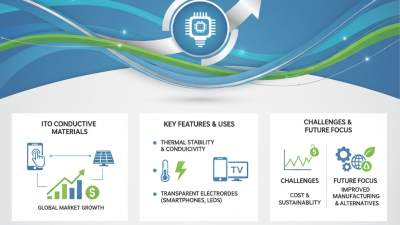
ITO (Indium Tin Oxide) conductive films are vital in various applications, such as touch screens, solar cells, and flat-panel displays. These films serve as transparent electrodes due to their excellent electrical conductivity and optical transparency. According to a recent market report, the global ITO film market is expected to grow at a CAGR of 7.5%, indicating a rising demand for this material in electronics and energy sectors.
When selecting an ITO conductive film for your specific project, consider the film's thickness, sheet resistance, and optical transparency. A study conducted in 2022 showed that thinner films tend to provide higher transparency. However, this may also result in increased sheet resistance. Balancing these factors is essential. For instance, a 150 nm thick film might offer a good compromise for electronic devices without sacrificing performance.
Application environments also play a crucial role. ITO films exposed to harsh conditions may degrade over time, affecting their conductivity and performance. Some studies indicate that environmental factors lead to a reduction in efficiency by up to 15% over a period. Therefore, understanding the specific requirements for your application is crucial. Awareness of these considerations can help avoid common pitfalls in ITO film usage and ensure success in your project.
Key Factors to Consider When Selecting Ito Conductive Film
Choosing the right ITO conductive film is crucial for the success of your project. Several key factors influence this decision. First, consider the film's thickness. A typical ITO film ranges from 50 to 200 nanometers. Thicker films offer lower resistance, but also increase weight. Projects requiring flexibility may benefit from thinner films, which can adapt to various shapes.
Next, transparency is vital. ITO films can achieve over 90% optical clarity. However, the exact transparency depends on the film's thickness and the method of production. A balance between conductivity and transparency must be achieved based on your project's specific needs. The optical performance can significantly impact applications like touch screens or solar cells.
Conductivity is another critical factor. The electrical conductivity of ITO film varies widely, influenced by factors such as the deposition technique used. Advanced techniques can yield films with sheet resistances as low as 10 ohm/sq. Choosing a film with the right resistivity aligns with your operational requirements. Yet, it’s essential to note that optimization may require trade-offs, and manufacturers often need to adjust setups to reach desired performance metrics. Proper testing and validation of the selected film can mitigate risks and enhance project outcomes.
How to Choose the Best ITO Conductive Film for Your Project? - Key Factors to Consider When Selecting ITO Conductive Film
| Factor |
Considerations |
Impact on Project |
| Thickness |
Measured in micrometers, affects flexibility and weight. |
Thinner films can enhance flexibility but may reduce durability. |
| Transparency |
Higher transparency allows better light transmission, crucial for displays. |
Can affect the visual quality of optical devices. |
| Sheet Resistance |
Resistance level influences conductivity performance. |
Lower resistance enhances electronic efficiency. |
| Surface Texture |
Smooth vs. textured surfaces impact adhesion and performance. |
Texture can improve grip in applications. |
| Coating |
Additional coatings may enhance durability and functionality. |
Can protect ITO layers from scratches and chemical exposure. |
| Size |
Available in various dimensions, affecting compatibility. |
Must match the specifications of the intended application. |
Evaluating the Electrical Properties of Ito Conductive Film
When selecting an ITO conductive film, understanding its electrical properties is crucial. The film's conductivity largely influences its performance in various applications. High conductivity ensures efficient electron flow, while lower conductivity may lead to reduced performance. It’s essential to identify your project's specific requirements to choose the right film.
The sheet resistance is a key factor in evaluating ITO films. It indicates how much the film resists the electric current passing through it. A lower sheet resistance means higher conductivity, which is often desired for touch screens or solar cells. However, extremely low resistance can come at a cost—such as translucency. Transparent conductive films must also retain adequate optical properties. Balancing conductivity and transparency is a challenge.
Moreover, it is important to consider temperature stability. ITO films can change their properties when heated, affecting their reliability. Testing under various conditions can highlight potential issues. Each application may have unique demands. Through careful evaluation, you can choose an ITO conductive film better suited to your project's needs.
Evaluation of Electrical Properties of ITO Conductive Film
This chart illustrates the electrical conductivity of various ITO conductive films. The values indicate the performance of each film type, providing a guide for selecting the best option for your specific project needs.
Comparing Different Types of Ito Conductive Films Available
When selecting Ito conductive films, it's crucial to understand the various types available. Each type serves specific applications and has unique properties that can impact performance. The most common types are transparent conductive oxides, which offer excellent light transmittance. Some have higher conductivity, while others prioritize flexibility.
It's important to consider your project's specific requirements. For example, if your application requires a thin layer, then opting for a low sheet resistance film might be necessary. Alternatively, if flexibility is critical, a polymer-based Ito film could be more suitable. Additionally, the thickness of the film can influence durability and adhesion. Testing different types in your environment might lead to unexpected results.
Evaluation often uncovers trade-offs. Higher conductivity can result in lower transparency. Alternatively, a film that meets your transparency needs may lack in conductivity. Balancing these factors involves assessing your overall design goals. Ultimately, the right Ito film will hinge on careful analysis of your project parameters and potential compromises.
Tips for Sourcing and Purchasing High-Quality Ito Conductive Film
When sourcing high-quality ITO conductive film, consider key aspects of performance. Check the film's transparency and resistivity. A film with high optical transmittance is essential for applications in displays and sensors. Resistivity should be low, as this ensures efficient conductivity. Manufacturers often provide specifications, but it's wise to verify them through independent testing.
The source of the ITO film also matters. Look for suppliers with a solid reputation in the industry. Research their history and customer feedback. Inquire about their quality control processes. Reliable suppliers usually have certifications to back their claims. This not only establishes trust but also guarantees that you are purchasing a product that meets your project’s exact needs.
Don't overlook the importance of sample testing. Reviewing physical samples can provide insight into the film's quality. Observe how it responds to bending and its durability against environmental factors. Sometimes, first-hand experience reveals issues not mentioned in product descriptions. Conducting thorough assessments before finalizing your choice can save time and resources in the long run.