2026 How to Choose the Right Nitrile Gasket for Your Applications?
Choosing the right Nitrile Gasket for your applications is crucial. Nitrile rubber, also known as Buna-N, offers excellent resistance to oils, fuels, and chemicals. According to a report by MarketsandMarkets, the global gasket market is projected to grow significantly, highlighting the importance of efficient materials like Nitrile.
In industries such as automotive and aerospace, Nitrile Gaskets play a vital role in sealing applications. Their ability to withstand varying temperatures and pressures makes them favorable. A study from Grand View Research indicates that the demand for Nitrile Gaskets has skyrocketed due to increased production in these sectors.
However, selecting the appropriate Nitrile Gasket can be complex. Factors like material composition, thickness, and application environment must be considered. Misjudging these parameters can lead to failures and increased maintenance costs. Therefore, understanding your specific application needs is essential for achieving optimal performance.
Understanding Nitrile Gaskets: Composition and Properties
Nitrile gaskets are widely used in various applications due to their unique properties. They consist primarily of acrylonitrile and butadiene, which provide excellent resistance to oils, fuels, and solvents. This resistance makes them suitable for automotive, aerospace, and industrial applications. According to industry reports, around 65% of gasket failures can be traced back to improper material selection or installation errors.
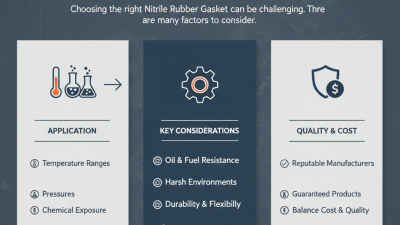
When choosing a nitrile gasket, it is essential to consider several factors. Pay attention to the temperature range of your application. Nitrile gaskets typically operate efficiently in temperatures from -40°F to 212°F. Beyond this range, their performance may deteriorate. The specific concentration of acrylonitrile in the compound can also affect the gasket's oil resistance. Higher acrylonitrile content generally means better fuel resistance but may compromise flexibility.
Tip: Always check the compatibility of the gasket material with the fluids it will encounter. Conduct a thorough evaluation of potential exposure to harsh chemicals or extreme temperatures.
Another crucial aspect is the hardness of the gasket material. Harder gaskets may not seal properly under less-than-ideal conditions, leading to leaks. Misinterpretations of the required hardness can result in selection errors. It's vital to test how the gasket performs under actual working conditions if possible.
Tip: Consider conducting leak tests to understand the effectiveness of your gasket choice. Real-world testing can reveal issues not visible during theoretical assessments.
Key Factors to Consider When Selecting Nitrile Gaskets
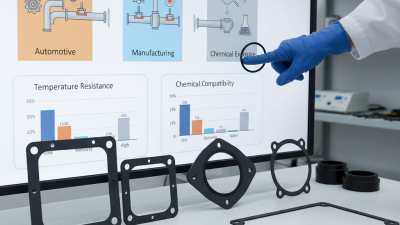
When selecting nitrile gaskets, several critical factors come into play. The specific application is crucial. Consider the operating temperature and pressure ranges. Gaskets must withstand extreme conditions without degrading. Evaluate the chemical compatibility of the nitrile material with substances it will encounter. This is essential to ensure longevity and prevent leaks.
Also, consider the gasket thickness. Thicker gaskets can handle more significant surface irregularities, while thinner ones may be suitable for smoother surfaces. Pay attention to the durometer hardness rating. A softer gasket may compress better, but it could also wear out faster. Ensure that you understand the implications of these choices on performance.
Lastly, think about installation requirements. Some gaskets need special tools or techniques. Understanding these details can save time and reduce frustration during setup. Though nitrile gaskets are highly reliable, misuse or incorrect selection can lead to failures. Reflect on past experiences to make better choices in the future.
Applications of Nitrile Gaskets in Various Industries
Nitrile gaskets are integral to many industries. They are widely used in automotive, aerospace, and manufacturing sectors. Their compound offers excellent resistance to fuel and oil, making them favorable for sealing applications. According to a recent market report from Research and Markets, the global nitrile gasket market is expected to grow by 5.1% annually, driven by increasing automotive production.
In aerospace, nitrile gaskets play a critical role in fuel systems. They can withstand extreme temperatures and high pressures. The ability to resist degradation enhances safety and performance. A study from Technavio estimates that the global aerospace sector will demand more durable sealing solutions, reinforcing the need for high-quality nitrile gaskets. This demand highlights the importance of selecting products that meet specific aerospace standards.
In manufacturing, these gaskets contribute to operational efficiency. They prevent leaks, reduce downtime, and save costs in fluid transfer systems. However, improper material selection can lead to failures, which may result in equipment damage. It's essential to evaluate the specific application requirements, such as pressure ratings and chemical exposure, before making a choice. Understanding these factors can mitigate risks and enhance reliability in various industrial applications.
Common Challenges and Solutions with Nitrile Gaskets
Nitrile gaskets are essential in many applications, yet users face common challenges. One major issue is their performance in extreme temperatures. Nitrile gaskets may swell or shrink under heat. This behavior can lead to leaks, compromising the integrity of the sealing. Ensuring proper installation can mitigate this problem. However, sometimes installation itself can be tricky.
Another challenge is chemical compatibility. Nitrile gaskets work well with many oils and fuels but struggle with some solvents. Not everyone is aware of this. Using a mismatched gasket can lead to rapid degradation. Selecting the right material based on your specific chemicals is crucial yet often overlooked. Testing under real conditions can reveal unknown weaknesses.
Users frequently encounter installation difficulties, such as misalignment or uneven surfaces. This can cause premature failure. Achieving the right torque on fasteners is critical but can be overlooked. A simple oversight can lead to costly repairs. Lastly, environmental factors like moisture can impact gasket longevity. Regular inspections can help identify early signs of wear and ensure reliability over time.
Maintenance and Longevity of Nitrile Gaskets in Use
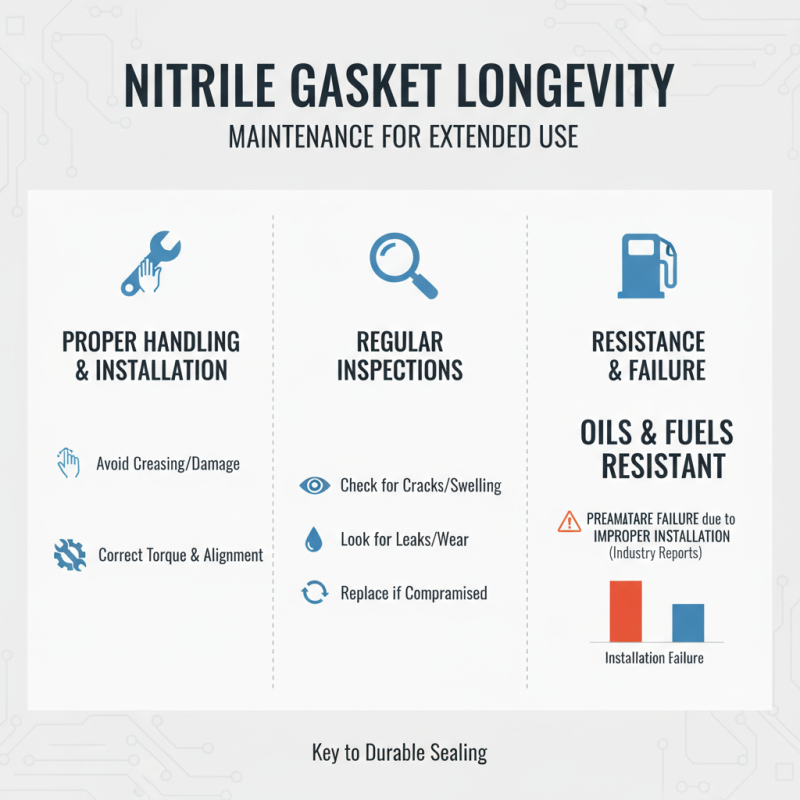
Nitrile gaskets are widely used due to their resistance to oils and fuels. However, maintenance is crucial for longevity. Proper handling, installation, and regular inspections can significantly impact their lifespan. According to industry reports, many premature gasket failures stem from improper installation techniques.
Regular maintenance routines should include visual inspections. Look for signs of wear, cracking, or deformation. Document any findings to track performance over time. A study by the Fluid Sealing Association found that maintenance can extend gasket life by up to 40%. Yet, many users overlook this key factor, risking costly downtime.
Environmental conditions may also play a role. High temperatures or exposure to harsh chemicals can degrade nitrile gaskets. Users sometimes underestimate the impact of these factors on performance. Keeping records of operational conditions helps ensure you select the right material for the application. Adjustments based on feedback can lead to improved reliability and efficiency.