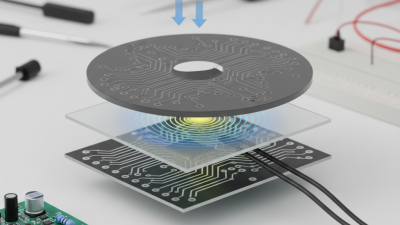
In the realm of innovative technology, selecting the right force-sensitive resistor is crucial. Dr. Emily Carter, a leading expert in sensor technology, once stated, "The choice of sensor can determine the success of your project.” This highlights the importance of understanding various options in the force-sensitive resistor market.
Force-sensitive resistors (FSRs) transform applied pressure into an electrical response. Their applications range from consumer electronics to robotics. Each application requires careful consideration of factors like sensitivity, size, and durability. Many users overlook how these characteristics influence performance.
As the industry evolves, familiarizing oneself with the latest advancements becomes vital. Varieties of FSRs are available, yet not all will meet specific needs. Investing time in research can lead to better decisions. The market is diverse, featuring variations that can be overwhelming. Users must identify priorities to choose effectively. Emphasizing the finer details can lead to improved outcomes, so reflection on selections is essential.
Force-sensitive resistors (FSRs) are essential in many applications, from medical devices to consumer electronics. They work by changing resistance based on applied force. This property makes them highly effective in touch-sensitive applications. The global demand for force-sensitive technologies is predicted to increase significantly, with a projected market growth rate of 12.5% annually. This rise can be attributed to the growing integration of FSRs in smart devices and automotive systems.
In medical settings, FSRs enable crucial monitoring functions. For instance, they help track patient movements and pressure distribution. Data indicates that pressure ulcer incidence can reduce by up to 50% with effective monitoring. However, the reliability of these sensors varies. Factors such as temperature and humidity can impact their performance. It's vital to choose FSRs constructed with materials that can withstand varying environmental conditions.
Precision in the selection process is important. While FSRs are flexible, misjudging their application can lead to inconsistent results. Some applications might require higher sensitivity, while others benefit from durability. Experts suggest evaluating specifications thoroughly. Understanding your specific use case, including the range of applied forces, will ensure the most suitable FSR is chosen. In this evolving landscape, keeping abreast of emerging technologies and performance metrics remains crucial for effective implementation.

When choosing the best force-sensitive resistors (FSRs), consider several key factors. Start by evaluating the application. Different projects require unique specifications. Understanding the environment in which the sensor will be used is crucial. For example, outdoor applications may need weather-resistant models.
Look at the sensitivity. This indicates how much force is needed to produce a measurable change in resistance. Some applications require high sensitivity, while others can work with lower sensitivity. Check the force range the FSR can handle. This ensures it fits your specific needs. In particular applications, a very precise range is essential.
Tips: Always compare multiple options. Not all resistors are built the same. Ensure you read reviews and check for reliability. Testing in real conditions can reveal unexpected performance issues. Don't overlook the importance of response time. In some scenarios, it could make a difference in application efficiency. When in doubt, consulting industry experts can provide valuable insights to refine your choices.
| Key Factors | Description | Importance Level |
|---|---|---|
| Sensitivity Range | The range of force detection that the FSR can accurately sense. | High |
| Size and Shape | The physical dimensions and form factor suitable for your application. | Medium |
| Response Time | The time taken to reply to applied force changes. | High |
| Durability | Ability to withstand mechanical stress and repeated use. | Medium |
| Operating Temperature | Temperature range in which the FSR functions correctly. | Low |
| Cost | Price considerations for budget constraints. | High |
Force-sensitive resistors (FSRs) are vital in many applications. They detect pressure, force, or weight. Understanding the types of FSRs helps in making informed choices. Two main types exist: conductive rubber and piezoresistive sensors.
Conductive rubber sensors are flexible and can easily conform to surfaces. They are durable and relatively inexpensive, making them popular in consumer electronics. However, their sensitivity can vary. Some applications may require more accuracy than they provide. On the other hand, piezoresistive sensors offer higher precision and more consistent readings. They perform well in harsh environments but are often more expensive. Choosing one often involves balancing cost against performance needs.
Tips: Consider your application environment carefully. This impacts your choice significantly. Also, understand that not all FSRs can handle extreme pressure scenarios. Testing prototypes before full-scale production can save money. Experiment with various types to find the best fit.
When evaluating force-sensitive resistors (FSRs), understanding performance specifications is crucial. These sensors respond to applied force, making them ideal for various applications. Accuracy, sensitivity, linearity, and hysteresis play vital roles in their performance. The device's response time should also align with project requirements, particularly in dynamic environments.
Consider accuracy and sensitivity. An FSR must provide reliable readings across varied force levels. Often, sensors exhibit non-linear behavior, making it important to assess linearity specifications carefully. Hysteresis can affect repeated measurements, leading to inconsistent data. Seeking data sheets with clear specifications helps in making informed decisions.
Not every option may suit your needs perfectly. Sometimes, compromise is necessary. For instance, a sensor with high sensitivity might have a shorter operational lifespan. Balancing these factors requires careful reflection. The goal is to select an FSR that meets performance expectations without sacrificing reliability. Revisiting specifications and real-world testing are effective strategies for ensuring the chosen component aligns with your project's demands.
When considering force-sensitive resistors (FSRs), cost analysis is crucial. These components vary widely in price based on their materials and construction. High-quality FSRs often come with a premium tag. However, cheaper options might compromise durability and reliability. A thorough examination of your budget is essential. Balancing cost with performance can be tricky.
Budget considerations should include not just the purchase price, but also longevity and maintenance costs. An FSR that fails prematurely can lead to additional expenses. Look for options that offer a good balance between initial cost and long-term value. This approach helps make the most informed decision, ensuring that the investment pays off over time.
Additionally, consider the applications of the FSR. For hobbyist projects, lower-cost options might suffice. In contrast, industrial applications demand higher reliability and precision. Each project’s unique requirements will shape your choice. Reflect on your specific needs to avoid overspending or settling for subpar quality. This balance between cost and performance is key for a successful outcome.