How to Choose the Right Elastomer Keypad for Your Project?
Choosing the right elastomer keypad can be challenging. Every project has unique needs. According to Dr. Jane Smith, a renowned expert in advanced materials, "The key to success lies in understanding your application's requirements." Her insight reflects the importance of matching design with functionality.
Elastomer keypads offer various advantages. They provide durability, resistance to wear, and a tactile feel that enhances user experience. When selecting one, think about the environment it will be used in. Will it face moisture or extreme temperatures? If so, these factors must influence your choice.
However, getting it right isn't always straightforward. Many overlook the nuances of material properties and keypad design. It’s essential to balance cost with performance. The wrong elastomer keypad can lead to functionality issues. Take time to assess your needs. A careful approach can prevent costly mistakes.
Understanding Elastomers: Types and Properties
Elastomers are crucial components in modern keypads. They offer flexibility, durability, and a range of tactile feedback. Many types exist, each with unique properties. Silicone rubber, for example, is known for its excellent weather resistance. This makes it ideal for outdoor applications. However, it can be expensive compared to other materials.
Thermoplastic elastomers (TPE) provide a good balance of performance and cost. They can be molded easily and exhibit great elasticity. TPEs are also less prone to degradation over time. On the downside, they may not withstand extreme temperatures as well as silicone.
When choosing an elastomer, consider the environment it will be exposed to. Humidity, temperature, and chemical exposure can affect performance. Ensure the material aligns with the specific requirements of your project. Sometimes, the ideal choice comes with trade-offs. A thorough understanding of each elastomer type helps make informed decisions.
Evaluating Project Requirements for Keypads
When evaluating project requirements for elastomer keypads, it’s essential to consider various factors. The first step often involves understanding the intended environment. For example, will the keypad be used indoors or outdoors? Temperature ranges can greatly affect material choice. According to industry reports, elastomers can maintain performance in temperatures from -50°C to 80°C. This range must align with your project’s conditions.
Next, think about durability. Keypads often face wear and tear, especially in industrial settings. Research indicates that elastomer keypads can withstand more than 1 million keystrokes. However, not all elastomers offer the same level of resistance. You might also assess how the keypad will be cleaned. Some materials can handle solvents, while others may degrade. This is a critical yet often overlooked detail.
Another aspect to reflect on is tactile response. Certain users prefer a softer touch, while others need a more rigid feel. User interactions can vary widely. Testing with potential users may reveal preferences that initially go unnoticed. Involving users in this phase might highlight issues you would typically miss. It’s about aligning real-world needs with technical specifications. Each project has unique requirements that deserve careful consideration.
Evaluating Project Requirements for Elastomer Keypads
Comparing Material Durability and Performance
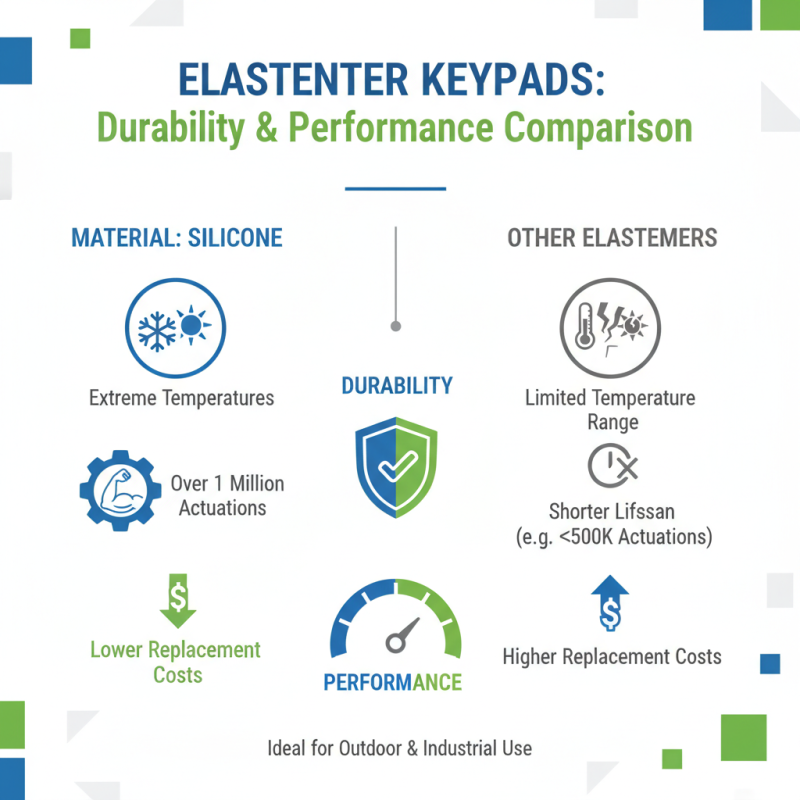
When selecting an elastomer keypad, durability and performance are crucial factors. Different materials exhibit varying resistance to wear and environmental conditions. For instance, silicone keypads can withstand extreme temperatures, making them ideal for outdoor use. A recent industry report indicates that silicone offers a lifespan of over 1 million actuations. This durability often translates into lower replacement costs over time.
On the other hand, polyurethane keypads excel in chemical resistance and can endure harsh cleaning agents. Studies show that polyurethane maintains its shape and performance quality better than some silicone counterparts when exposed to these substances. However, they may not perform as well in high-temperature settings, leading to potential concerns about their longevity.
It's also important to consider tactile feedback. The feel of a keypad can significantly impact user experience. While silicone generally provides a softer touch, polyurethane can offer more pronounced feedback. Balancing material properties with user preferences requires careful thought. Misjudging this aspect can lead to dissatisfaction among end-users, which may affect project success. Observing material performance in real-world conditions can help guide selections effectively.
Design Considerations for Optimal Keypad Functionality
When selecting an elastomer keypad, consider the design aspects that affect usability. Keypad shape and texture can enhance or hinder user experience. The tactile feel is crucial. Users often prefer keypads that offer a comfortable and responsive touch. Consider using different textures for various functions. This makes it easier for users to identify keys by feel alone.
Another important aspect is the layout. Key positioning should be intuitive. Think about how users will interact with the keypad in real-life scenarios. A cramped design may cause frustration. Ensure there’s enough space between keys. This allows for accurate input, reducing errors during use.
Color and visual contrast also play significant roles. A well-thought-out color scheme can improve visibility. Bright colors can draw attention to essential functions. However, excessive use of bright colors can be overwhelming. It's necessary to strike a balance. Testing with actual users can provide valuable feedback. Observing their interactions can reveal unexpected issues. Design is often iterative, and embracing imperfections can lead to better solutions over time.
Cost Analysis and Supplier Selection for Elastomer Keypads
When selecting elastomer keypads, cost plays a critical role. Reports indicate that elastomer keypads can range from $0.50 to $5.00 per unit, depending on factors like design complexity and material quality. Understanding these aspects helps project managers set realistic budgets. High-quality silicone materials may increase upfront costs but offer longer durability. Cost-effectiveness isn’t just about price; it’s about longevity and performance over time.
Supplier selection significantly impacts overall project costs. Research shows that suppliers with strong reputations often provide better quality and reliability. However, lower-cost suppliers might promise quick delivery but can compromise on quality. It’s essential to evaluate not just the price, but also warranty provisions and customer service support offered by potential suppliers. Balancing price and quality is a challenge many face in this sector. Investing time in supplier evaluation can yield better results, even if it initially seems tedious.