Inquiry
Form loading...

How to Choose the Right Nitrile Gasket for Your Application?

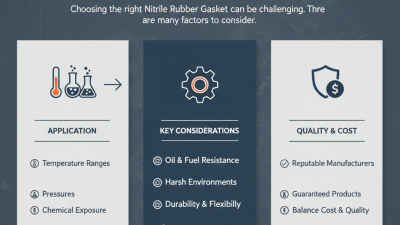
Choosing the right Nitrile Gasket for your application can be challenging. Nitrile gaskets are popular for their oil resistance and durability. They serve in various industries, from automotive to manufacturing.

When selecting a Nitrile Gasket, consider the environment. Temperature and chemical exposure are crucial factors. Different Nitrile blends offer unique characteristics. Understanding these nuances can lead to better performance. Ask yourself about the specific application. Is it under constant pressure? Is there a risk of solvents?

Selecting the wrong gasket can lead to leaks. This can be costly and dangerous. It's vital to analyze your needs thoroughly. A small oversight can result in significant failures. Consulting with a gasket specialist can provide valuable insights. They can offer guidance on materials and designs. Remember, the right choice enhances efficiency and safety in your operations.

How to Choose the Right Nitrile Gasket for Your Application?

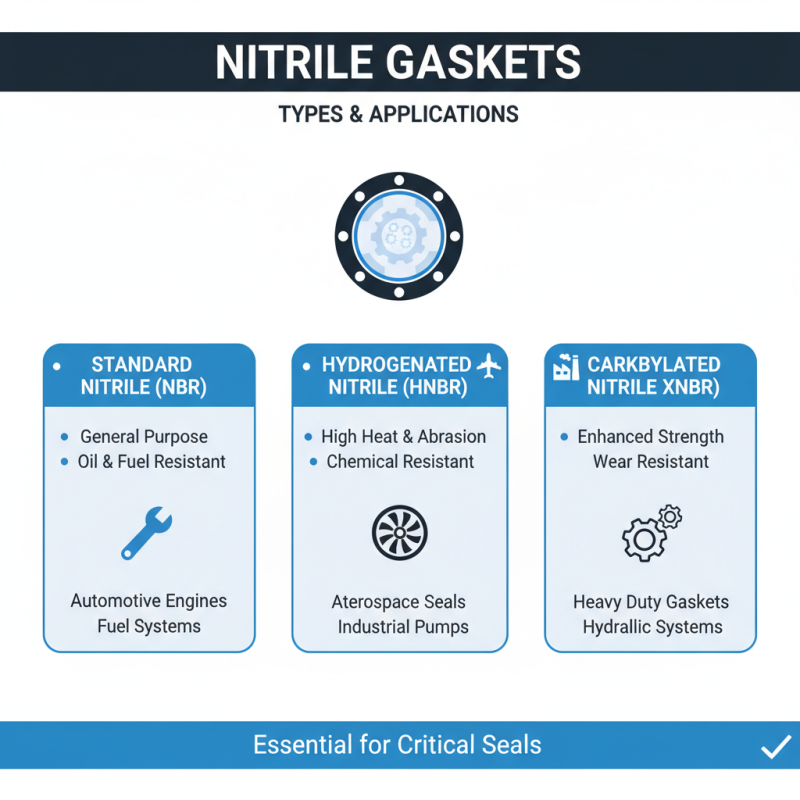
Types of Nitrile Gaskets and Their Applications

How to Choose the Right Nitrile Gasket for Your Application?

Nitrile gaskets are essential for a variety of applications. They are often used in automotive, aerospace, and industrial sectors. Understanding the different types can help in making informed choices.

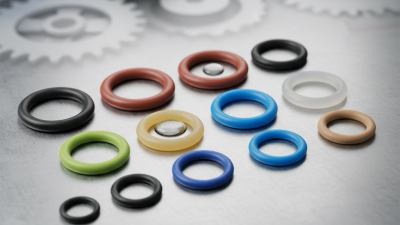
There are various types of nitrile gaskets, including flat, spiral wound, and rubber-to-metal bonded designs. Flat gaskets offer simplicity and cost-effectiveness. Spiral wound gaskets provide strength and flexibility under extreme pressures. Rubber-to-metal bonding enhances durability and resistance to chemical exposure. Each of these types serves unique purposes and must be evaluated carefully.

In practical use, it’s important to consider environmental factors. Temperature fluctuations can impact gasket effectiveness. Over time, gaskets may degrade, leading to leaks. Regular inspections and maintenance can prevent failures. Assessing these variables can foster better decisions. Different applications require tailored solutions. Always strive for the right fit to avoid costly mistakes.
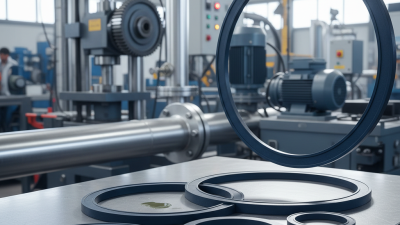

Key Properties to Consider in Nitrile Gaskets

Choosing the right nitrile gasket is crucial for your application. Various properties define the performance of these gaskets. Temperature resistance is vital. Nitrile gaskets can handle different temperature ranges, typically from -40°C to 120°C. Understanding the operational environment helps ensure suitability.

Chemical resistance is another key factor. Nitrile gaskets resist oils, fuels, and many solvents. Evaluate the specific chemicals in your application. This reduces the chance of material degradation over time. A thorough review of compatibility is essential.

Tips: Always conduct a visual inspection before installation. Look for any signs of wear or damage. Additionally, consider the thickness of the gasket. A thicker gasket may provide a better seal under certain conditions. Ensure that your selection meets all necessary specifications for maximum performance.

How to Choose the Right Nitrile Gasket for Your Application? - Key Properties to Consider in Nitrile Gaskets

Property Description Recommended Applications
Temperature Resistance Nitrile gaskets can withstand temperatures ranging from -30°C to 120°C. Automotive, oil and gas, and industrial machinery applications.
Chemical Resistance Excellent resistance to oils, fuels, and grease. Used in sealing applications involving petroleum products.
Compression Set Ability to return to its original shape after compression. Ideal for dynamic applications where flexibility is required.
Durometer Hardness Available in different hardness levels, typically 70-90 Shore A. Selection based on application load and sealing requirements.
Thickness Standard thickness ranges from 1mm to 6mm. Based on the gap to be sealed and pressure conditions.

Factors Influencing Nitrile Gasket Selection

Choosing the right nitrile gasket depends on several factors influencing its performance. Temperature resistance is a key factor; nitrile gaskets typically perform well between -40°C and +120°C. However, applications often demand specific ranges. The operating environment, including exposure to chemicals and oils, significantly impacts gasket selection. Research shows that prolonged exposure can lead to degradation, reducing lifespan.

Material thickness is another vital aspect. Thicker gaskets often provide better sealing under higher pressures but may hinder flexibility. According to industry reports, a gasket's compressibility can affect its sealing capability. Using a proper thickness ensures both strength and adaptability.

Tip: Always conduct compatibility tests to avoid unforeseen failures.

Additionally, fluid type dictates the choice of nitrile formulation. Certain formulations handle specific fluids better. Nitrile gaskets designed for petroleum-based fluids have varied compositions. Some variations might perform poorly in water-based environments.

Tip: Consult technical data sheets for guidance.

Remember, not all nitrile gaskets are uniform. Variations can lead to performance inconsistencies. It’s crucial to assess requirements carefully to avoid costly mistakes down the line.

Installation Tips for Optimal Nitrile Gasket Performance

How to Choose the Right Nitrile Gasket for Your Application?

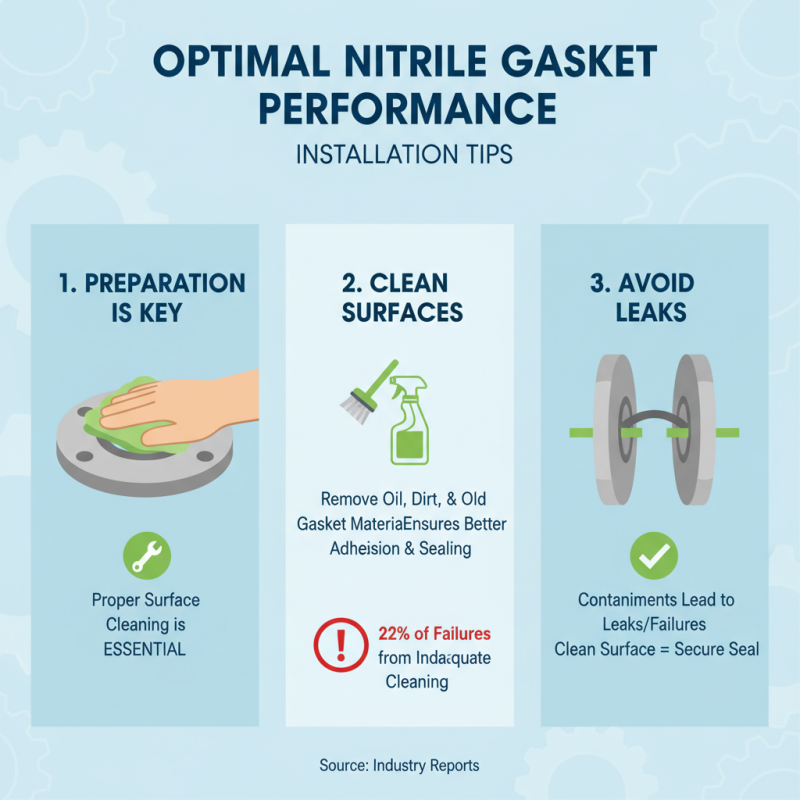
When installing nitrile gaskets, preparation is key for optimal performance. Proper surface cleaning is essential. Contaminants can lead to leaks or failures. Reports show that 22% of gasket failures result from inadequate surface preparation. Ensure the surfaces are free of oil, dirt, or old gasket material. A clean surface ensures better adherence and sealing.

Torque application is another critical factor. Uneven torque can cause premature gasket failure. Standard guidelines recommend a torque of 20-30% of the bolt's yield strength for nitrile gaskets. However, each application can vary. Over-tightening can lead to deformation, while under-tightening may not provide a proper seal. Regular inspections can help identify torque issues early.

Temperature and pressure considerations must not be overlooked. Nitrile gaskets perform best in applications up to 90°C. Prolonged exposure to extreme conditions may reduce longevity. One study indicates that operating beyond recommended limits can decrease gasket life by up to 50%. Always assess your application's specific needs. This ensures you choose the right nitrile gasket and install it correctly for maximum efficiency.

Maintenance Practices for Nitrile Gaskets in Applications

Nitrile gaskets are widely used in various applications due to their durability and resistance to oils and temperatures. Proper maintenance practices play a crucial role in extending their lifespan. Regular inspections help identify wear and tear early. Look for signs of cracking or deformation. These small details can prevent larger failures in the system.

Cleaning the gaskets regularly is essential for optimal performance. Use mild detergents and avoid abrasive tools that might damage the surface. Contaminants can compromise the seal, leading to leaks. Storing gaskets in a clean, dry environment also improves their longevity. Avoid exposure to harsh chemicals or extreme temperatures that could degrade materials over time.

Keep track of the operating conditions. Elevated temperatures or fluctuating pressures impact gasket performance. Adjust maintenance practices accordingly. Documenting your maintenance routine can also provide insights into the gasket's overall performance. Reflection on previous experiences can lead to better choices in future applications. Addressing these factors ensures that nitrile gaskets remain effective and reliable.

Maintenance Practices for Nitrile Gaskets