2026 How to Use Flat Membrane Keypad for Your Projects?
In recent years, the demand for innovative user interfaces has surged. Flat Membrane Keypads have become essential in various projects, from consumer electronics to industrial applications. According to a report by MarketsandMarkets, the global market for membrane switches is expected to reach $4.45 billion by 2026. This indicates a growing reliance on Flat Membrane Keypads for effective human-machine interaction.
Industry expert Dr. Jane Palmer emphasizes the importance of Flat Membrane Keypads in design. She states, "These keypads can enhance user experience and simplify complex operations." However, while they offer many advantages, such as durability and low profile, there are challenges in achieving optimal tactile feedback. Many designers overlook the tactile aspect, compromising user satisfaction. Observing these nuances can significantly improve the final product.
As we explore how to effectively integrate Flat Membrane Keypads into projects, it is crucial to reflect on both their strengths and limitations. Understanding user needs will help in designing functional and aesthetically pleasing interfaces. In a competitive market, finding that balance is key to success.

Understanding Flat Membrane Keypads: An Overview of Technology
Flat membrane keypads are versatile components in many electronic projects. They consist of a flexible substrate with printed circuits and a protective overlay. Users often find them in appliances, medical devices, and control panels. Their compact design makes them a popular choice for space-constrained applications. Many appreciate how they offer a clean, sealed look. However, they do present some challenges that require attention.
One common issue is durability. Over time, the pressure from frequent use can lead to wear. Depending on the environment, moisture and dust can also affect performance. It's essential to consider these factors when designing your project. Another aspect to reflect on is the sensitivity of key presses. Users may sometimes miscalculate the pressure needed, leading to missed inputs. Proper testing is crucial to ensure that users have a seamless experience.
Additionally, integration can be tricky. While they are easy to use with microcontrollers, the initial setup might confuse beginners. Wiring mistakes can lead to malfunctions. It is essential to double-check connections. Despite challenges, flat membrane keypads provide an engaging user interface when properly utilized. Careful consideration of their limitations and benefits is vital for successful implementation.
Key Features and Benefits of Flat Membrane Keypads in Projects
Flat membrane keypads offer unique advantages for various projects. Their sleek design makes them aesthetically pleasing and easy to integrate. These keypads are often lightweight, making them suitable for portable devices. Their flexibility allows for creative designs that can fit into tight spaces.
One significant benefit is their durability. Flat membrane keypads are resistant to dust and moisture, adding longevity to devices. They can withstand heavy usage, which is vital in demanding environments. However, it’s essential to consider that not all projects may require such features. Some applications might find limitations in tactile feedback. Users could struggle with less pronounced clicks when pressing the keys.
Another important aspect is customization. Many flat membrane keypads can be tailored to specific needs. Colors, shapes, and layouts can enhance user experience. In some cases, though, over-customization may lead to functionality issues. It is crucial to strike a balance between style and usability. Finding the right design can elevate a project’s interface significantly. Prioritizing user needs will lead to better outcomes in the long run.
2026 How to Use Flat Membrane Keypad for Your Projects? - Key Features and Benefits of Flat Membrane Keypads in Projects
| Feature |
Description |
Benefits |
| Durability |
Resistant to moisture, dust, and debris. |
Long lifespan and reliable operation in various environments. |
| Customization |
Available in various colors, layouts, and designs. |
Easily integrate into any project aesthetic. |
| Cost-effectiveness |
Lower manufacturing cost compared to traditional keypads. |
Reduces overall project expenses. |
| User-friendly Interface |
Simple touch interface for easy operation. |
Enhances user experience and accessibility. |
| Compact Design |
Slim and lightweight for space-saving applications. |
Ideal for portable devices and tight spaces. |
Application Areas: Where Flat Membrane Keypads Shine in Industry
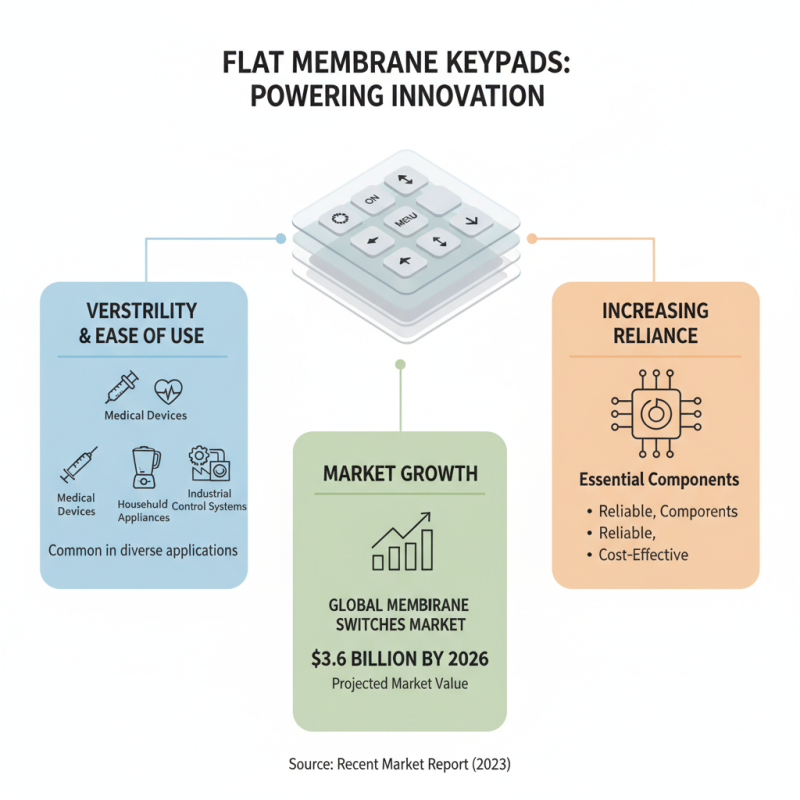
Flat membrane keypads have gained popularity in various industries due to their versatility and ease of use. These keypads are commonly found in medical devices, household appliances, and industrial control systems. According to a recent market report, the global membrane switches market is projected to reach $3.6 billion by 2026, highlighting the increasing reliance on these components.
In the medical field, flat membrane keypads serve crucial functions. They are often used in portable medical equipment where durability and sanitation are key. These keypads allow for quick input despite gloves or other barriers. However, manufacturers sometimes overlook the importance of tactile feedback. Users may find it challenging to operate devices without a clear touch response, posing difficulties in critical situations.
Another notable application is in consumer electronics. Flat membrane keypads are cost-effective and lightweight. They can enhance the design of products like microwaves and remote controls. Still, not every design considers user ergonomics effectively. A poorly designed keypad can frustrate users, leading to decreased customer satisfaction. Attention to detail is essential; designers must ensure usability is a priority.
Guidelines for Selecting the Right Flat Membrane Keypad for Your Needs
When selecting a flat membrane keypad for your projects, consider the specific needs of your application. Different projects require different features. A keypad's size and shape should match your device's interface design. The tactile feedback of the buttons is also crucial. Users often prefer a responsive feel. It enhances the experience of using the device.
Pay attention to durability as well. Membrane keypads can vary in resistance to wear and tear. Some are suitable for harsh environments. Conducting tests on various materials is beneficial. Ensure they can withstand daily use. Perhaps even consider aesthetics. Color and graphics can play a role in user engagement.
Don’t overlook the importance of customization. Many keypads allow for personalized layouts. This could improve usability significantly. However, custom designs may take more time to implement. Balancing customization with production speed is a common challenge. Learn from the process; sometimes, mistakes in design can lead to better outcomes.
Usage of Flat Membrane Keypads in Projects (2026)
Best Practices for Designing with Flat Membrane Keypads in Mind
When designing with flat membrane keypads, consider user experience and accessibility. According to a report by the Research and Markets, the global membrane switch market is projected to reach $7.83 billion by 2026. This growth indicates a rising demand for intuitive interfaces. It's crucial to ensure that your keypad is easy to use. Keep the layout simple and functions clearly labeled.
Incorporating tactile feedback can enhance user interaction. Industry surveys suggest that 30% of users prefer keypads with noticeable resistance when pressed. However, designers often overlook this detail. A keypad that feels satisfying can significantly improve user satisfaction. Additionally, consider environmental factors. Moisture and dust can affect performance. Select materials that can withstand these elements, especially in industrial settings.
Testing is another vital aspect. Prototypes can reveal flaws early on. Data from a usability study highlighted that 25% of users encountered difficulty with complex designs. Iterating on designs based on real user feedback is essential. Creating a user-friendly flat membrane keypad may take time, but the effort pays off in boosting usability and overall project success.