Why Choose Thin-Film Pressure Sensors for Modern Applications?
In the rapidly evolving field of technology, the importance of accurate pressure sensing cannot be overstated. Thin-Film Pressure Sensors have emerged as a leading choice for many modern applications. Their unique design and construction provide outstanding reliability and precision. These sensors use a very thin layer of material, enhancing their responsiveness to pressure changes.
Thin-Film Pressure Sensors are favored in industries ranging from aerospace to medical devices. Their compact size allows for integration in tight spaces while maintaining performance. This compact nature does not sacrifice sensitivity. In fact, it often enhances the sensor's ability to detect minute changes in pressure. Users find this feature particularly valuable in critical applications.
Despite their advantages, some may question the overall durability of Thin-Film Pressure Sensors compared to traditional options. This skepticism is worth considering. However, with advances in material science, these sensors can now withstand harsher environments than ever before. Balancing benefits and concerns is essential in making informed choices for specific applications.

Benefits of Thin-Film Pressure Sensors in Semiconductor Manufacturing Processes
Thin-film pressure sensors are becoming vital in semiconductor manufacturing. Their compact size makes them ideal for niche applications. These sensors excel in environments where space is limited. They offer exceptional sensitivity and accuracy, even in harsh conditions. This combination helps improve the overall quality of semiconductor products.
One significant advantage of thin-film sensors is their quick response time. This feature allows manufacturers to make rapid adjustments during production. As processes become more automated, this responsiveness is crucial. However, some challenges remain. Calibration can be tricky, requiring specialized knowledge. Ensuring reliability in different environmental conditions can also pose a problem.
Moreover, the materials used in thin-film pressure sensors can influence their lifespan. While many options exist, not all are suitable for every application. Manufacturers must carefully consider these factors. Choosing the right materials is essential for performance. Optimizing the manufacturing process with the right sensors can lead to substantial benefits. Still, ongoing research in this field may reveal better options in the future.
Why Choose Thin-Film Pressure Sensors for Modern Applications?
| Feature |
Benefit |
Application in Semiconductor Manufacturing |
| High Sensitivity |
Accurate pressure measurements in critical processes |
Used in wafer fabrication to monitor environments |
| Compact Size |
Space-saving design fits into tight spaces |
Integration in small footprint equipment |
| Wide Measurement Range |
Flexibility for various applications |
Adapts to changing process conditions |
| Durability |
Long-lasting performance under harsh conditions |
Suitable for high-vacuum and cleanroom environments |
| Fast Response Time |
Quick measurements for rapid process control |
Critical for real-time monitoring in production lines |
Key Advantages of Thin-Film Technologies in Automotive Applications
Thin-film pressure sensors are gaining traction in automotive applications due to their unique advantages. One notable benefit is their compact size. This enables integration in tight spaces where traditional sensors might be unsuitable. The reduced footprint allows for innovative designs in vehicle manufacturing. Lightweight materials enhance vehicle efficiency by reducing overall weight.
Another advantage is their high sensitivity. Thin-film sensors can detect minute changes in pressure, leading to precise performance measurements. This precision improves vehicle safety and reliability. For instance, they can monitor tire pressure effectively, helping to prevent accidents caused by under-inflated tires. Moreover, these sensors exhibit excellent linearity and repeatability, ensuring consistent readings over time.
While thin-film technology offers robust benefits, some challenges remain. The manufacturing process may require advanced techniques, which can increase production costs. Additionally, ensuring long-term reliability under harsh automotive environments can be a concern. However, continuous advancements in materials and techniques promise to address these issues. Embracing thin-film pressure sensors can undoubtedly enhance the performance and safety of modern vehicles.
Performance Metrics: Sensitivity and Accuracy of Thin-Film Pressure Sensors
Thin-film pressure sensors are becoming vital in various modern applications. Their effectiveness hinges on two primary metrics: sensitivity and accuracy. Sensitivity refers to how well a sensor responds to changes in pressure. Higher sensitivity allows for precise measurements, crucial in environments where even minor fluctuations matter. In medical devices, for instance, accurate pressure readings can determine patient outcomes. Thin-film technology enhances these aspects through its unique fabrication processes.
Accuracy is equally important. A sensor that lacks accuracy may lead to faulty data, affecting critical decisions. Thin-film sensors provide better accuracy due to their stable construction and minimal environmental interference. They maintain consistent performance under varying conditions, which is essential for both industrial and aerospace applications. Reliable data underpins effective monitoring and control, especially in safety-critical systems.
Despite their advantages, there are considerations. Not all thin-film sensors perform equally under extreme conditions. Some may struggle with temperature fluctuations or humidity. Testing different models helps identify the optimal choice for specific needs. Understanding strengths and weaknesses fosters better application in real-world scenarios. The journey to perfecting these sensors is ongoing. Continuous improvements in technologies could lead to even more reliable options in the future.
Market Trends: Adoption Rate of Thin-Film Sensors Across Industries
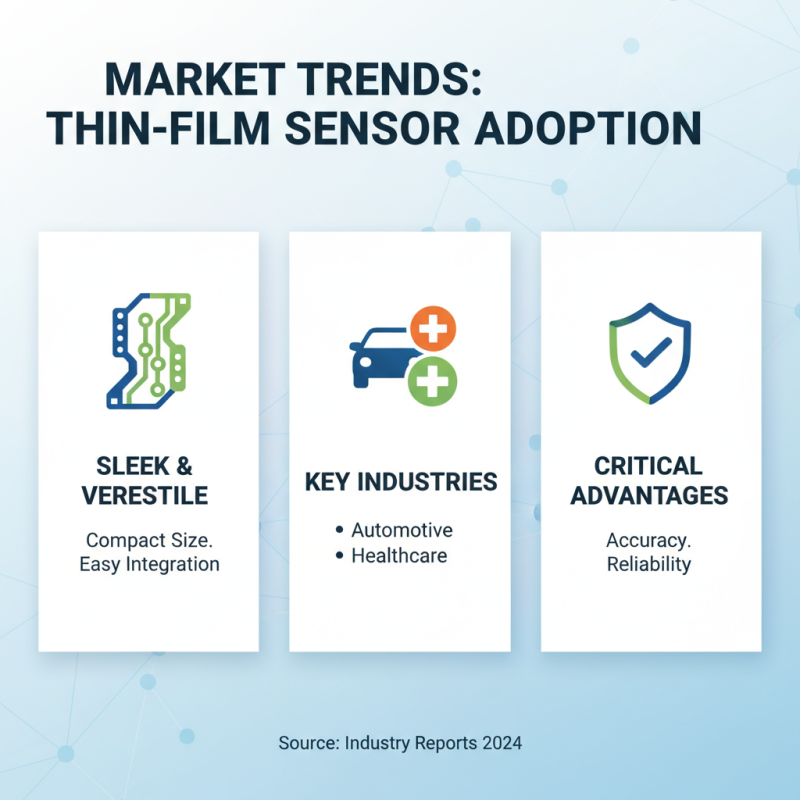
The adoption rate of thin-film pressure sensors has surged across various industries. These sensors are sleek and versatile, making them ideal for modern applications. Their compact size allows for easy integration into tight spaces, which is essential for many devices. Industries like automotive and healthcare are leading the charge. They rely on these sensors for their accuracy and reliability in critical applications.
One notable trend is the shift towards miniaturization. As devices become smaller, the need for precise pressure measurement grows. Thin-film sensors meet this demand effectively. They offer quick response times and can withstand harsh environments. Nevertheless, challenges remain. Some manufacturers encounter issues with durability under extreme conditions. This raises concerns about long-term reliability. Addressing these matters is essential for continued growth.
Moreover, an evident gap in training and expertise persists among engineers. Implementation of thin-film sensors often requires specialized knowledge. This can hinder widespread adoption in some sectors. Companies must invest in training programs to overcome this barrier. Improving expertise will enable better design and application of these sensors in the future.
Comparative Analysis: Thin-Film vs. Traditional Pressure Sensors in IoT Applications
In modern IoT applications, the choice between thin-film and traditional pressure sensors is crucial. A study by MarketsandMarkets predicts that the pressure sensor market will reach USD 5.8 billion by 2025. Thin-film sensors are gaining traction due to their compact design and high sensitivity. They can detect minute pressure variations, making them ideal for precision applications.
Traditional sensors, while reliable, often fall short in environments where space is a premium. They tend to be bulkier, limiting their use in small devices. Additionally, thin-film technologies can improve response times by up to 40%, as noted in a recent survey by Frost & Sullivan. This rapid response can significantly enhance the performance of IoT devices in real-time monitoring.
Tip: When selecting a sensor for IoT applications, consider the operating environment. Thin-film sensors excel in restricted spaces, but they may require more careful calibration. Regular testing can ensure they remain accurate over time. This proactive approach can mitigate some of the common drawbacks associated with newer technologies.
Comparative Analysis of Pressure Sensors in IoT Applications
This chart highlights the comparative analysis of thin-film pressure sensors versus traditional pressure sensors in modern IoT applications, showcasing their feature scores based on various parameters relevant to performance and efficiency.