Why Choose Force Sensitive Resistor for Your Next Project?
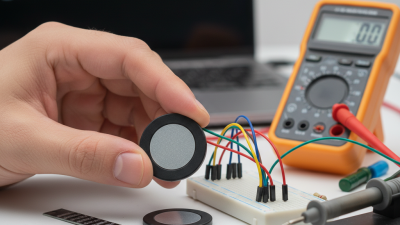
In the evolving landscape of technology, Force-Sensitive Resistors (FSRs) have gained significant traction. According to the 2023 Market Research Report, the demand for FSRs is expected to grow by over 15% annually. These sensors offer unique capabilities for many applications, ranging from consumer electronics to industrial automation. Dr. Emily Carter, an expert in sensor technology, asserts, "FSRs provide unparalleled sensitivity and versatility, making them ideal for innovative projects."
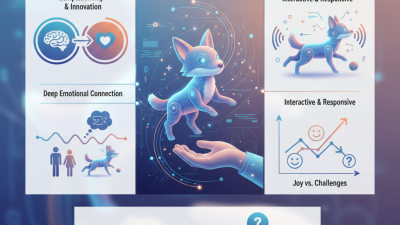
One of the main advantages of using FSRs is their ability to measure varying levels of force. This feature allows designers to develop more interactive and responsive devices. Moreover, FSRs are lightweight and compact, fitting seamlessly into various products. A growing number of industries are recognizing their potential. Yet, some challenges remain, particularly regarding durability and calibration. Designers must address these issues to fully benefit from this technology.
Integration of the Force-Sensitive Resistor into projects can drastically enhance user experience. However, engineers should proceed with caution. Quality and reliability can vary significantly among suppliers, leading to potential project setbacks. A well-considered choice will yield better performance and longer product lifespans.
Advantages of Force Sensitive Resistors in Electronic Projects
Force Sensitive Resistors (FSRs) are fast becoming essential components in electronic projects. Their ability to detect pressure makes them unique. This functionality opens new avenues for innovation. Projects in robotics, wearables, and smart devices benefit immensely from their use. According to a 2022 market research report, the demand for FSRs is projected to grow at a compound annual growth rate (CAGR) of 7.5%. This trend underlines their increasing relevance in various applications.
One advantage is the simplicity of integrating FSRs into existing designs. They are lightweight and require minimal space. The devices can provide real-time feedback. For example, in a smart home project, an FSR can sense when a door is being pressed or held closed. Their responsiveness is crucial. Yet, precision is not always guaranteed. Factors like temperature and humidity can affect readings. Proper calibration is necessary to ensure reliability.
Moreover, the cost-effectiveness of FSRs is another key benefit. Bulk purchasing can lead to substantial savings. In educational contexts, their affordability allows for experimentation and learning. However, it’s worth noting that durability might not match that of traditional sensors. Frequent use can lead to wear and inaccurate readings. Testing the FSR in your specific application is advised before full-scale implementation.
Why Choose Force Sensitive Resistor for Your Next Project? - Advantages of Force Sensitive Resistors in Electronic Projects
| Feature |
Description |
Advantages |
Applications |
| Sensitivity |
Detects varying levels of pressure |
Allows precise control and measurement |
Wearable devices, robotics |
| Size Variety |
Available in multiple sizes |
Flexible integration into diverse projects |
Smart home devices, gaming controllers |
| Durability |
Long-lasting and reliable under pressure |
Reduced need for frequent replacements |
Industrial applications, automotive sensors |
| Simplicity |
Easy to integrate into circuits |
Lower complexity in design |
DIY electronics, educational projects |
Applications of Force Sensitive Resistors in Modern Technology
Force sensitive resistors (FSRs) are pivotal in many modern applications. They can detect changes in force or pressure, making them ideal for various industries. From robotics to healthcare, FSRs are transforming how devices respond to user input. Their ability to operate in flexible and thin formats allows their integration into diverse designs. Recent reports indicate that the market for FSRs is expected to grow at a compound annual growth rate (CAGR) of 8.4% over the next five years. This growth underscores the increasing demand for precise and responsive technology.
In healthcare, FSRs contribute significantly to patient monitoring systems. They can detect weight changes in hospital beds, alerting caregivers when assistance is needed. A study showed that devices equipped with FSRs reduced patient response times by 30%. In robotics, these sensors help machines interact safely with humans. They enable robots to adjust grip strength, preventing damage to objects. This adaptability is essential in manufacturing and assembly lines, where precision is critical.
However, reliance on FSRs is not without challenges. Their sensitivity can lead to false readings, particularly in applications requiring high accuracy. Engineers must balance the sensor placement and calibration. Achieving optimal performance demands extensive testing and fine-tuning. Understanding these limitations is vital for developers incorporating FSR technology. As the market evolves, professionals must continually assess the effectiveness and reliability of these sensors.
How Force Sensitive Resistors Work: A Technical Overview
Force sensitive resistors (FSRs) are essential for various applications. Their ability to detect force makes them versatile. These devices change resistance based on applied pressure. When you apply force, the resistance decreases. This behavior enables precise readings for touch interfaces and weight sensing.
How do FSRs achieve this? They consist of a resistive material enclosed between two conductive layers. When pressure is applied, the molecular structure compresses, altering resistance. This change can be measurable and is often linear, providing a straightforward way to understand force inputs. The simplicity of the design allows for easy integration into electronic circuits.
Yet, FSRs have limitations. Their sensitivity can vary with temperature and humidity. This can lead to inconsistent readings if not accounted for. Additionally, they might not provide the accuracy needed for critical applications. Users should consider these factors before integrating FSRs into their projects. Understanding these nuances helps ensure successful implementation.
Comparing Force Sensitive Resistors with Other Sensor Technologies
When exploring sensor technologies, the comparison between
force sensitive resistors (FSRs) and alternatives is critical. FSRs are renowned
for their simplicity and compact size. Their operation relies on changes in resistance based on applied force.
In contrast, technologies like capacitive and piezoelectric sensors may offer specific advantages but often at
a higher complexity and cost. Industry data indicates that FSRs are favored in applications such as robotics and
wearable devices. Reports suggest FSRs can be up to 50% more cost-effective than capacitive sensors in
similar applications.
Despite their benefits, FSRs present certain challenges. Their sensitivity may drift over time, affecting
long-term reliability. Additionally, the linearity of their response can vary with different pressure levels,
which complicates accurate measurement. While capacitive sensors provide more stable outputs, they often require
more intricate setups. Piezoelectric sensors can capture rapid force changes but may not be suitable for
constant pressure applications. Thus, choosing the right sensor depends on the specific requirements of a
project.
Moreover, many developers overlook the environmental factors
that influence FSR performance. Temperature and
humidity can distort readings, leading to potential inaccuracies. As
projects become more sophisticated, awareness of these limitations is vital. Balancing ease of integration and
performance is essential for project success with force sensitive resistors.
Tips for Integrating Force Sensitive Resistors into Your Project Design
Force sensitive resistors (FSRs) are versatile components for various projects, capturing the essence of touch and pressure. When integrating FSRs into your designs, consider the following tips to enhance user interaction.
First, placement is crucial. Position the FSR where users naturally apply pressure. For instance, if designing a wearable device, place it on the fabric where fingers rest. Additionally, ensure proper calibration. The varying resistance in different materials may lead to inconsistent readings. Test multiple FSRs to find one that reacts optimally under your project's conditions.
Another important tip involves shielding the FSR from environmental factors.
Dust and moisture can significantly affect performance. Encase the resistor in protective materials to maintain reliability. Remember, testing your setup under real-life conditions will unveil flaws. Identify scenarios that may lead to erroneous readings and refine your design accordingly. Each project teaches valuable lessons, revealing areas for improvement. By addressing these aspects, you will create a more responsive and dependable device.