How to Source Ito Coated PET in 2026?
Sourcing Ito Coated Pet in 2026 requires more than comparing prices on supplier websites. Buyers must connect electrical performance, optical clarity, coating quality, and delivery reliability. Ito Coated Pet is commonly supplied as rolls or cut sheets, depending on the application. Touch sensors, flexible heaters, displays, and laboratory prototypes may require different specifications.
A practical sourcing process starts with a clear technical brief. Define sheet resistance, visible light transmission, haze, PET thickness, coating side, width, length, and surface treatment. Ask suppliers for recent test reports, coating uniformity data, adhesion results, and batch traceability. A small sample roll can reveal issues that a polished datasheet hides. Check whether the film curls, scratches, or develops visible defects during lamination.
Supplier experience also matters. Established manufacturers should explain their sputtering process, inspection controls, packaging methods, and production capacity. Request samples from more than one batch. Performance can vary.
In 2026, buyers should review lead times, minimum order quantities, Incoterms, payment terms, and quality claims before signing a purchase agreement. Confirm applicable compliance documentation for the destination market, such as restricted-substance declarations and material safety information. Requirements differ by region.
Do not choose the lowest quotation too quickly. A cheaper film may create higher costs through failed bonding, unstable resistance, or delayed production. Still, no sourcing plan is perfect. Forecasts can change, and supplier promises need verification. An experienced buyer keeps technical alternatives available and records every approval decision. That discipline supports reliable procurement without sacrificing flexibility.
Define the Performance Requirements for ITO-Coated PET
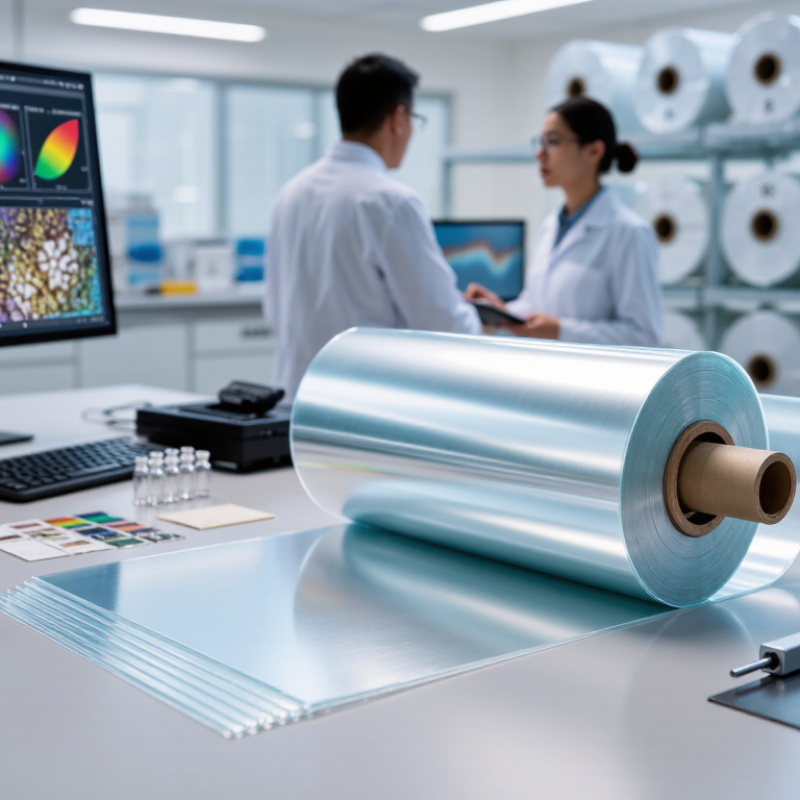
Sourcing ITO-coated PET in 2026 should begin with performance requirements, not a supplier shortlist. The required balance depends on the device, assembly method, and service environment. Write every requirement as a measurable value with an acceptable range. Samples can mislead. For transparent electrodes, specify sheet resistance in ohms per square, visible-light transmission, and haze. State whether measurements apply before or after lamination. That detail is often missed.
Mechanical requirements need equal attention. Define PET thickness, coating-side identification, minimum bend radius, surface roughness, and dimensional tolerance. If the film passes through rollers, request resistance data after repeated bending. For outdoor or warm assemblies, include humidity, temperature, and ultraviolet exposure targets. Adhesion should be tested with a defined method, not described as “strong.” Ask for results after aging, since fresh coating performance may hide later cracking.
A practical purchase document should identify test equipment, conditioning time, sample size, and acceptance criteria. Require samples from several production lots, not one carefully selected sheet. Review uniformity across the roll, including edges and splice areas. Record contact resistance after the intended bonding process. It may reveal a mismatch between the coating and adhesive. No specification is perfect. Early prototypes may expose an unnecessary tolerance or a missing test. Revise the requirements before placing a large order.
How to Source ITO-Coated PET in 2026?
Define the performance requirements before comparing suppliers.
The chart shows indicative engineering target ranges for ITO-coated PET by application. Lower sheet resistance improves electrical performance, while the final specification should also confirm visible-light transmission, haze, adhesion, flexibility, and environmental durability.
Identify Suitable ITO-Coated PET Specifications and Suppliers
How to Source ITO Coated PET in 2026?
Identify Suitable ITO-Coated PET Specifications and Suppliers
Sourcing ITO-coated PET starts with the device, not the supplier list. Define electrode layout, operating temperature, bend radius, and expected service life. Common starting specifications include 100–188 micrometre PET, 30–200 ohms per square resistance, and 80–90% visible transmittance. Haze below 2% is often preferred for display applications. Confirm whether values apply before or after lamination.
The market is expanding. Grand View Research estimated the transparent conductive film market above USD 6 billion in 2023, with continued growth through the decade. IDTechEx’s 2024 analysis also identifies ITO-PET as a mature solution for touch interfaces, although flexibility and cost remain practical limitations. These reports support demand, not automatic supplier quality.
Ask for evidence. Request recent resistance maps, optical test methods, adhesion results, and bend-cycle data. Check coating uniformity across the full roll, not only a laboratory sample. Suppliers should explain sputtering conditions, PET grade, cleanroom controls, packaging, and traceability. Compare pilot-roll performance before negotiating volume pricing. A low quoted resistance may hide poor transparency or unstable aging. I still treat “high flexibility” as an incomplete claim without radius and cycle counts. A spreadsheet cannot reveal edge cracking. Supplier audits can.
Evaluate Coating Quality, Electrical Properties, and Durability
How to Source ITO Coated PET in 2026: Evaluate Coating Quality, Electrical Properties, and Durability
Sourcing ITO coated PET requires more than checking a conductivity number. IDTechEx’s Transparent Conductive Films 2024–2034 report identifies ITO as a leading material for touch and display applications. Typical commercial films offer sheet resistance between 10 and 100 ohms per square, with optical transmission often above 85%. Ask suppliers for measured data at the actual coating thickness. A low resistance value can still mislead. Uneven coating may create visible streaks, unstable signals, and weak bonding around edges.
Request mapping data from several points across each roll. Four-point probe testing should confirm sheet resistance, while haze and transmission testing should follow ASTM D1003. Check surface roughness, adhesion, and resistance change after bending. IEC 62899 guidance for printed electronics can support process evaluation. For flexible assemblies, test repeated bending at the intended radius. Heat and humidity exposure also matter. A laboratory result may not represent production conditions.
Tips: Compare samples from the roll center and edges. Inspect them under angled light. Ask for test dates, instruments, and sample conditioning. Include a 60°C, 90% relative humidity exposure when suitable. Then retest resistance and transmission. I would also inspect the clear protective layer carefully; minor scratches become obvious after lamination. Some suppliers provide impressive averages, but variation is often the real sourcing risk.
Compare Pricing, Minimum Orders, Lead Times, and Certification
How to Source Ito Coated PET in 2026?
Pricing depends on PET thickness, coating resistance, sheet size, and order volume. In 2026, request pricing per square meter and per roll. This prevents unclear comparisons. Ask whether prices include slitting, protective film, packaging, and delivery. A low quote may exclude testing or setup charges.
Ask for samples first. Confirm the minimum order before approving prototypes. Many suppliers accept small trial quantities, but production orders may require several hundred square meters. Standard specifications often ship within three to six weeks. Custom coating grades can take longer, especially during capacity shortages. Request a written production schedule with inspection dates. Do not guess.
Certification should match your application. Request current ISO 9001 evidence, material safety data, and a certificate of analysis for each batch. For electronics, check surface resistance, optical transmission, haze, adhesion, and temperature performance. Ask for test methods, laboratory details, and report dates. For regulated applications, verify relevant environmental and product compliance documentation independently. Certificates can be genuine but still unsuitable for your target market.
A practical sourcing review should compare at least three written quotations. Record coating thickness, PET grade, MOQ, lead time, warranty terms, and rejected-roll handling. Supplier claims may change after technical discussions. That happened in one trial I reviewed: the quoted MOQ excluded custom cutting. Build a small contingency for defects and transit delays. The cheapest offer is not always the most reliable one.
Select a Supplier and Establish Quality Control for Ongoing Sourcing
How to Source ITO Coated PET in 2026?
Select a Supplier and Establish Quality Control for Ongoing Sourcing
Reliable ITO coated PET sourcing starts with a supplier that understands your device and processing requirements. Ask for coating thickness, sheet resistance, optical transmission, haze, PET thickness, roll width, and surface energy data. A professional supplier should explain measurement methods, not only provide attractive figures. Request samples from a normal production lot, then test them under your actual lamination, printing, or etching conditions. Laboratory results can change after storage or handling.
Use a supplier scorecard with technical, production, and communication criteria. Check coating uniformity across the roll, edge quality, winding tension, packaging, and traceability. I have found that response time matters when a defect appears. Small delays can stop an entire conversion line. Review process controls, calibration records, inspection equipment, and corrective-action procedures during a remote or on-site audit. Keep approved samples for comparison.
Quality control must continue after approval. Define incoming checks for sheet resistance, haze, adhesion, dimensions, and visible particles. Set sampling levels before the first shipment arrives. Retain samples from each lot, and record roll numbers, test results, storage conditions, and operator observations. Use trend charts to detect gradual drift instead of waiting for failure. Not every supplier report is equally useful. Some data may need independent verification, especially during process changes. No scorecard is perfect. Revisit it after three shipments, customer complaints, or material changes, and adjust the inspection plan when real production exposes weaknesses.
How to Source Ito Coated PET in 2026? — Supplier Selection and Ongoing Quality Control
| Supplier Code |
Recommended Use |
ITO Sheet Resistance |
Visible Light Transmission |
Haze |
PET Thickness |
ITO Adhesion |
Typical MOQ |
Typical Lead Time |
Incoming Quality-Control Plan |
| Supplier A |
Transparent electrodes for touch sensors and low-current flexible circuits |
45–60 Ω/sq
Uniformity target: ≤ ±10% |
≥ 84%
Measured in the visible range |
≤ 1.5% |
125 μm
Common PET substrate grade |
Pass
Cross-hatch adhesion: Class 4B or better |
500–1,000 m² |
4–6 weeks after approved specification |
Measure sheet resistance at a defined grid; inspect haze and coating defects; verify roll identification and certificate of analysis. |
| Supplier B |
Flexible heaters, antennas, and applications requiring lower electrical resistance |
15–30 Ω/sq
Uniformity target: ≤ ±8% |
≥ 80% |
≤ 2.0% |
100–125 μm |
Pass
Cross-hatch adhesion: Class 4B or better |
1,000–2,000 m² |
5–8 weeks after approved specification |
Use four-point-probe mapping for resistance; check dimensional tolerance, winding quality, surface scratches, and edge damage before release. |
| Supplier C |
Display windows and optical films where transparency is prioritized over conductivity |
80–120 Ω/sq
Uniformity target: ≤ ±12% |
≥ 87% |
≤ 1.0% |
50–100 μm |
Pass
Cross-hatch adhesion: Class 4B or better |
300–800 m² |
3–5 weeks after approved specification |
Prioritize optical transmission and haze testing; inspect coating uniformity under controlled lighting and confirm PET thickness by calibrated gauge. |
| Supplier D |
Large-area printed electronics and prototype-to-production programs |
30–60 Ω/sq
Uniformity target: ≤ ±10% |
≥ 82% |
≤ 2.0% |
125–188 μm |
Pass
Cross-hatch adhesion: Class 4B or better |
200–500 m² for pilot orders |
6–9 weeks for production quantities |
Approve a first-article roll; compare resistance, optical data, and dimensions against the signed specification before recurring orders. |
| Supplier E |
Cost-sensitive applications with moderate conductivity and standard optical requirements |
60–100 Ω/sq
Uniformity target: ≤ ±15% |
≥ 82% |
≤ 2.5% |
100–125 μm |
Pass
Cross-hatch adhesion: Class 4B or better |
500–1,000 m² |
4–7 weeks after approved specification |
Use tightened sampling for haze, pinholes, stains, and resistance uniformity; require corrective action when any critical defect is found. |