- Home
- About Us
- Virtual Factory Tour
-
Products
- Precision Rubber Parts
- Printed Circuits
- Applications
- News
- Contact Us
Leave Your Message
Global packaging teams need materials that perform consistently across machines, climates, and shipping routes. Ito Pet Film attracts attention because PET offers a practical balance of clarity, strength, dimensional stability, and process familiarity. These qualities matter when film passes through high-speed rollers, maintains accurate print registration, and protects packages during long transport. Yet material selection should not rely on appearance alone.
In real converting work, small details often decide success. A roll may look flawless under warehouse lighting, then reveal curl after lamination or humidity exposure. Ito Pet Film should therefore be assessed through representative trials, including thickness checks, tensile testing, seal-compatibility reviews, and aging observations. Performance can vary with grade, coating, adhesive, and machine settings. No film is perfect. That caveat matters.
A dependable global decision combines supplier documentation with independent verification. Teams should request technical data, lot information, safety documents, and applicable food-contact evidence before approval. They should also compare regional recycling requirements, labeling rules, and end-of-life infrastructure. Results from a pilot run are more useful than broad promises. This article explores why Ito Pet Film may support diverse packaging programs, where it can reduce operational uncertainty, and which questions deserve careful review. The strongest choice is not always the lowest-cost roll.
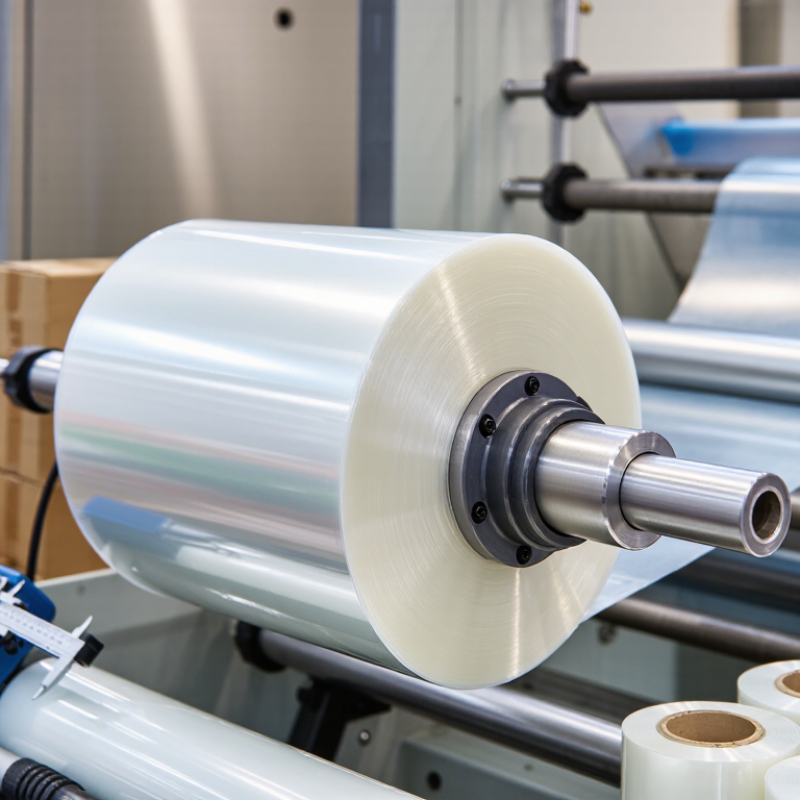
What Is Ito PET Film?
PET film is a thin, strong packaging material made from polyethylene terephthalate. It is commonly used for labels, flexible laminates, pouches, and protective layers. Its smooth surface supports clear printing, while its stiffness helps packages keep their shape during transport.
In practical converting work, PET film performs well on high-speed packaging lines. It resists tearing, tolerates moderate heat, and provides a dependable barrier against moisture and handling damage. Different thicknesses suit different applications. A clear film may display the product, while a coated or metallized structure can improve light protection. Still, PET film is not perfect. It may crease during poor handling, and unsuitable sealing layers can cause weak package edges. Performance depends on the complete laminate, not the film alone.
Tips: Check thickness, haze, tensile strength, heat resistance, and seal compatibility before production. Request test samples and run them through the actual filling and sealing equipment. Small trials reveal problems early. Also confirm food-contact documentation, recycling guidance, and regional compliance requirements. Specifications can look convincing on paper, yet real machine conditions often expose unexpected friction, curling, or static.
| Data Dimension | Typical PET Film Information | Packaging Value |
|---|---|---|
| Material definition | PET film is a thin, oriented plastic film made from polyethylene terephthalate, a polyester material. | Provides a strong, stable substrate for flexible packaging, labels, laminates, pouches, and protective layers. |
| Common thickness range | Approximately 8–250 micrometres, depending on the packaging structure and application. | Supports lightweight designs while allowing different combinations of stiffness, protection, and handling performance. |
| Density | About 1.39 g/cm³ for standard PET. | Offers a consistent material basis for calculating package weight, yield, and material consumption. |
| Mechanical strength | Oriented PET film commonly provides tensile strength in the approximate range of 150–250 MPa, depending on grade and direction. | Helps resist tearing, stretching, puncture, and damage during converting, filling, transportation, and storage. |
| Dimensional stability | Low shrinkage and good dimensional control when properly manufactured and processed. | Improves registration accuracy for printing, coating, metallizing, laminating, and slitting. |
| Optical performance | Can be produced in clear, translucent, matte, white, or metallized formats with good surface uniformity. | Supports attractive graphics, product visibility, controlled opacity, and premium shelf presentation. |
| Barrier performance | Provides useful resistance to moisture, gases, aromas, and grease, but the exact barrier level depends on thickness, coating, and laminate design. | Helps protect food, cosmetics, pharmaceuticals, and industrial products when combined with suitable sealing and barrier layers. |
| Temperature capability | PET has a glass-transition temperature of approximately 67–81°C and a melting range commonly near 250–260°C; practical use limits depend on film structure and processing conditions. | Suitable for many heat-exposed converting and packaging processes when the complete package is designed within validated limits. |
| Chemical resistance | Generally resistant to dilute acids, oils, and many common solvents, while strong alkalis and certain chemicals may affect the material. | Provides dependable protection for a broad range of packaged products, subject to compatibility testing. |
| Printing and converting | Available with treated surfaces to improve ink, adhesive, coating, and metallization adhesion. | Works with gravure, flexographic, digital, coating, laminating, and slitting processes when the film surface is properly specified. |
| Recyclability | PET is widely recyclable where collection and recycling infrastructure is available. Recycling suitability is more straightforward for mono-material PET structures than for complex laminates. | Can support circular packaging strategies when material selection, labeling, inks, adhesives, and local recycling requirements are considered together. |
| Global packaging suitability | The material has established use across food, beverage, personal care, healthcare, electronics, and industrial packaging markets. | Offers a familiar, scalable, and adaptable film platform for different regional converting standards and end-use requirements. |
| Important specification factors | Thickness, tensile strength, elongation, haze, gloss, coefficient of friction, surface treatment, shrinkage, corona level, barrier performance, and food-contact compliance. | Selecting the correct specifications helps improve line efficiency, package durability, appearance, regulatory compliance, and overall cost performance. |
Note: Values shown are typical industry ranges for PET film and may vary according to film grade, orientation, thickness, surface treatment, test method, and end-use conditions.