- Home
- About Us
- Virtual Factory Tour
-
Products
- Precision Rubber Parts
- Printed Circuits
- Applications
- News
- Contact Us
Leave Your Message
Rubber Bumpers are small components with a surprisingly large responsibility. They absorb impact, reduce vibration, protect surfaces, and help equipment remain stable during repeated use. For global buyers, these benefits are not merely technical details. They affect product life, maintenance costs, packaging safety, and customer confidence.
Dr. John S. Dick, a respected rubber technologist and author, stated, “Rubber must be selected for the service conditions it will face.” This principle remains highly practical. A bumper used beneath a metal cabinet may need different hardness from one installed on outdoor machinery. Temperature, compression, friction, moisture, and chemical exposure can all change performance. A part that feels firm in a warehouse may soften or crack after months of service. That mistake is easy to underestimate.
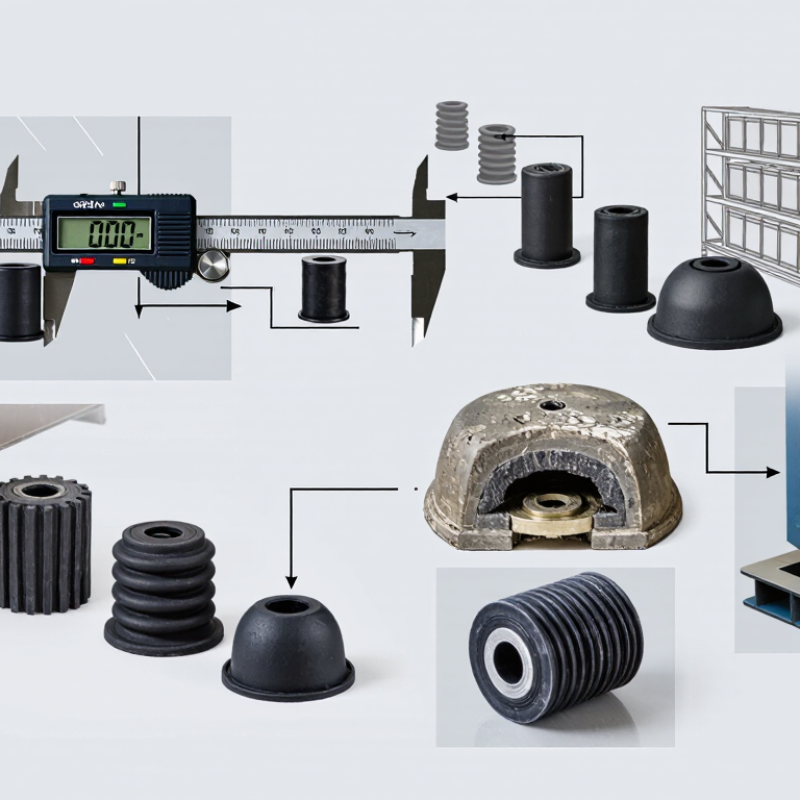
Experienced buyers should examine material specifications, dimensional tolerances, hardness data, load testing, and production consistency. They should also request samples before approving large orders. Visual quality matters, but it cannot replace measurable performance. Shore hardness alone is not enough.
Rubber Bumpers should be evaluated as engineered components, not cheap accessories. Reliable suppliers explain compound selection, mold control, inspection methods, and expected service conditions. Still, no supplier can promise perfect performance without accurate application information. That is an uncomfortable limitation, but an important one.
For international procurement teams, the strongest decision combines evidence, field experience, and careful questions. A lower unit price may look attractive. Yet premature failure, damaged surfaces, or repeated replacement can cost far more. This article examines why Rubber Bumpers remain essential for global buyers and how informed sourcing reduces avoidable risk.
Why Are Rubber Bumpers Essential for Global Buyers?
Rubber bumpers protect cabinets, machines, doors, and transport equipment from repeated impact. Material choice matters more than appearance. A 2024 Grand View Research assessment projects the global rubber market to grow at about 4.8% annually through 2030. That growth reflects wider demand for reliable sealing and vibration-control components.
EPDM suits outdoor use because it resists ozone, sunlight, water, and temperature changes. It performs well around building equipment and vehicle assemblies. NBR offers stronger resistance to mineral oils and fuels, making it useful near hydraulic systems. However, sunlight can shorten its service life. Silicone remains flexible across wide temperature ranges and supports cleaner applications. It usually costs more and may tear under sharp mechanical stress. Natural rubber provides excellent elasticity and impact absorption. It can age faster under ozone, oils, and prolonged heat. No material wins every test.
Tips: Ask suppliers for hardness, compression-set, tensile, temperature, and chemical-resistance data. Request test methods, not only attractive numbers. ISO 815-1 compression-set testing can reveal whether a bumper will recover after long loading. Check samples in the real environment. A small outdoor trial may expose swelling, cracking, or unexpected noise. Global buyers should also review dimensional tolerances and packaging. Reports are useful, but field conditions remain imperfect.
| Evaluation Dimension | EPDM Rubber | NBR Rubber | Silicone Rubber | Natural Rubber |
|---|---|---|---|---|
| Primary Strength | Excellent resistance to weathering, ozone, water, and steam | Strong resistance to mineral oils, fuels, and hydraulic fluids | Wide operating temperature range and good flexibility | High elasticity, resilience, and mechanical strength |
| Typical Temperature Range | Approximately −50°C to +150°C, depending on compound and exposure | Approximately −30°C to +120°C, depending on grade and fluid exposure | Approximately −60°C to +200°C; some specialized grades operate beyond this range | Approximately −50°C to +80°C; continuous high-temperature use can accelerate aging |
| Weather and Ozone Resistance | Excellent | Fair to good; may require protection in severe outdoor exposure | Excellent | Fair; natural aging may cause cracking under ozone and sunlight |
| Oil and Fuel Resistance | Poor with petroleum oils and fuels | Excellent with many mineral oils and fuels | Poor to fair with many oils and fuels | Poor with petroleum oils and fuels |
| Water and Steam Resistance | Excellent, including hot water and steam in suitable grades | Fair to good; formulation and temperature are important | Good; high-pressure steam may require a specific compound | Fair; prolonged hot-water exposure can reduce service life |
| Typical Hardness | Approximately 40–90 Shore A | Approximately 40–90 Shore A | Approximately 20–90 Shore A | Approximately 30–90 Shore A |
| Compression Set Performance | Good to excellent in many sealing and cushioning compounds | Good; compound selection is important for elevated temperatures | Good at high temperatures, but may be weaker under heavy mechanical loads | Good resilience, but permanent deformation can increase with heat and aging |
| Abrasion and Tear Resistance | Good for general outdoor cushioning and protection | Good, especially where oil exposure is combined with mechanical wear | Fair; not the first choice for severe abrasion or cutting loads | Excellent resilience and good tear resistance in many grades |
| Common Rubber Bumper Uses | Outdoor equipment feet, enclosures, vehicle components, HVAC systems, and pipe supports | Machine mounts, engine-related parts, hydraulic equipment, and oil-exposed stops | High-temperature equipment, electrical assemblies, medical devices, and food-contact applications where approved | Vibration isolators, impact stops, machinery mounts, and applications requiring high resilience |
| Main Limitations | Not suitable for prolonged contact with petroleum oils and fuels | Limited resistance to ozone, sunlight, and some polar chemicals | Lower tear and abrasion resistance; generally higher material cost | Poor resistance to oils, fuels, ozone, and long-term outdoor aging |
| Relative Cost Level | Low to medium | Low to medium | Medium to high | Low to medium, subject to natural rubber market conditions |
| Best Choice for Global Buyers When... | The bumper will face sunlight, rain, ozone, outdoor temperature changes, or steam | The bumper will contact mineral oil, fuel, grease, or hydraulic fluid | The application requires very low or high temperature flexibility, cleanliness, or electrical insulation | High rebound, impact absorption, and strong mechanical performance are more important than chemical or weather resistance |
Note: Values are typical engineering ranges for general comparison. Actual performance depends on compound formulation, hardness, reinforcement, geometry, loading, environment, manufacturing tolerances, and applicable test standards.