Leave Your Message

Why Choose ITO Coated PET Film for Packaging?

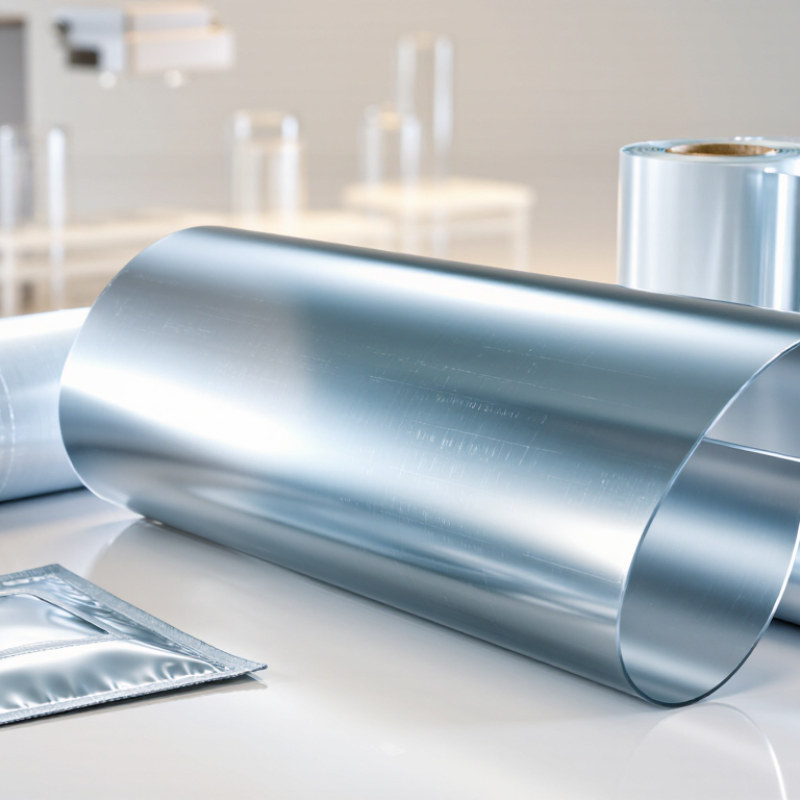
ITO-coated PET combines a clear polyester film with a thin indium tin oxide layer. The result can transmit light while providing electrical conductivity, making it useful in selected packaging designs. Examples include transparent sensor windows, antistatic liners, and packages that need a conductive surface. It is not a universal packaging upgrade. Coating adhesion, flexing, humidity, and contact with the product all require testing.

The scale of the packaging challenge is clear. The OECD’s Global Plastics Outlook reports that packaging generated about 40% of global plastic waste in 2019. That figure does not prove ITO-coated PET is more sustainable. It does show why packaging choices need careful performance and end-of-life evaluation. A lighter or more functional film helps only when it works reliably in real use.

Materials scientist David S. Ginley is known for research on transparent conducting materials. A useful design principle, paraphrased from the priorities in this field rather than presented as his verbatim words, is: “Balance transparency, electrical performance, and durability for the intended use.” For Ito Coated Pet, that balance should be measured on the finished package—not assumed from a coating specification. Check optical transmission, surface resistance, seal compatibility, and performance after bending. Small details matter: a crease across a sensor window can change its electrical behavior. The right choice depends on the application, the converting process, and the recycling route available.
Why Choose ITO Coated PET Film for Packaging?

What Is ITO-Coated PET Film?

Why Choose ITO Coated PET Film for Packaging?

What Is ITO-Coated PET Film?

ITO-coated PET film is a thin polyester sheet covered with indium tin oxide, a transparent conductive material. The PET provides a lightweight, flexible base, while the ITO layer lets electrical charge move across the surface. The result is a film that can remain see-through while offering controlled surface conductivity.

That matters.

In packaging, this combination can support antistatic functions, transparent sensing elements, or conductive features built into a package. A converter might handle the film as a roll, cut it to size, then laminate it with other layers. In practice, performance depends on coating uniformity, surface resistance, and how the film is joined to surrounding materials. A clear window is useful, but clarity alone does not prove the package will perform well.

ITO-coated PET is not a universal fix. Its conductive coating may be less tolerant of sharp creases or repeated flexing than the PET base itself. That detail can be easy to miss when a sample is tested only as a flat sheet. Packaging designers should check the finished structure under real handling conditions, including folds, sealing, and abrasion. It is a promising material, though the trade-offs deserve a closer look.

How Is ITO-Coated PET Film Manufactured?

Manufacturing ITO-coated PET film begins with a clean, stable web of polyethylene terephthalate. Dust or oil can create visible defects, so the film is unwound, cleaned, and often treated with plasma before coating. In a roll-to-roll vacuum chamber, magnetron sputtering deposits indium tin oxide from a ceramic target. Oxygen flow and power settings affect the coating’s conductivity and clarity. The PET moves continuously, like a ribbon, while operators monitor tension and chamber conditions. This step is easy to underestimate.

After deposition, the coated web may receive controlled heating, but temperatures must suit PET’s limits. Excess heat can distort the substrate; too little process control can leave uneven resistance. Manufacturers inspect the film for pinholes, haze, adhesion, and sheet resistance, then slit it into rolls. Small defects matter. A widely cited review by K. Ellmer in Nature Photonics (2012) describes transparent conductive electrodes using benchmarks around 80% or higher visible-light transmission and below 100 ohms per square. These are reference targets, not guarantees for every PET grade or application. Actual performance depends on coating thickness, process conditions, and measurement methods. For packaging, converters should also check how the film behaves during bending, sealing, and lamination; a clear sample can still fail after handling.

Why Choose ITO Coated PET Film for Packaging? - How Is ITO-Coated PET Film Manufactured?

Category Dimension or Manufacturing Stage Typical Information Packaging Relevance
Material structure Base film and conductive layer Polyethylene terephthalate (PET) film carries a thin, transparent indium tin oxide (ITO) coating. Combines a flexible polymer support with a transparent electrical-conductivity layer.
Substrate PET film thickness Commercial PET films are available across a broad range of gauges, commonly from tens to a few hundred micrometres; the selected thickness depends on the product design. Film thickness affects handling, flexibility, stiffness, and compatibility with converting equipment.
Electrical performance Surface resistance ITO-coated PET products are offered at different sheet-resistance levels. Values can range from tens to hundreds of ohms per square, with some products outside this range. Lower sheet resistance can support electrical grounding or charge-dissipation designs. The required value should be specified for the intended use.
Optical performance Visible-light transmission Transmission depends on the PET grade, ITO thickness, coating design, and measurement method. Transparent conductive films are commonly designed for high visible transmission. Useful where a package or label needs to remain visibly clear while incorporating a conductive layer.
Functional benefit Static control The conductive ITO layer can help dissipate electrical charge when the film is properly connected or used in a suitable static-control design. May be considered for packaging or protective covers used with sensitive electronic components. Performance depends on the complete package and grounding arrangement.
Functional benefit Transparent electrical features ITO is electrically conductive and optically transparent, making it suitable for transparent electrodes and conductive patterns. Can support package features such as transparent sensing areas or electrical contacts when integrated with other components.
Manufacturing 1. PET preparation The PET web is unwound, cleaned, and dried to reduce dust, oil, moisture, and other contaminants before coating. Cleanliness helps promote coating uniformity and adhesion.
Manufacturing 2. Surface treatment Depending on the PET grade and process, the surface may receive treatment to improve coating adhesion. Surface preparation is selected according to the film, coating process, and required durability.
Manufacturing 3. ITO deposition A common method is magnetron sputtering, in which an ITO target is deposited onto the moving PET web in a controlled vacuum environment. Roll-to-roll processing can coat continuous webs, subject to equipment and product specifications.
Manufacturing 4. Process control Deposition conditions, including power, web speed, pressure, and oxygen level, are controlled to achieve the target coating properties. These conditions influence conductivity, optical transmission, coating uniformity, and adhesion.
Manufacturing 5. Inspection and finishing Finished film may be checked for sheet resistance, optical transmission, appearance, adhesion, and defects before slitting or rewinding. Inspection helps confirm that the roll meets the agreed product specification.
Design consideration Flexing and handling ITO is a brittle ceramic oxide coating. Repeated bending, stretching, or abrasion can damage the conductive layer or change its electrical performance. Evaluate bend radius, converting steps, and expected handling; a more flexible conductive coating may be preferable for severe flexing.
Design consideration Barrier and food-contact requirements ITO-coated PET is a functional film, not automatically a complete packaging barrier or a food-contact-approved material. Verify barrier performance, sealing compatibility, migration requirements, and regulatory suitability for the finished package and its market.
Specification note Product-to-product variation Resistance, transmission, thickness, adhesion, and durability vary by construction and supplier specification; request measured values and test methods for the exact grade. Final selection should be based on the package’s electrical, optical, mechanical, and regulatory requirements.

Which Properties Make It Suitable for Packaging?

ITO-coated PET film combines a clear polyester base with a thin, electrically conductive indium tin oxide layer. The PET provides flexibility and useful tensile strength, so the film can pass through many converting lines without handling like a brittle sheet. Its smooth surface also supports consistent printing or lamination when the chosen inks and adhesives are compatible. Transparency matters: workers can inspect packaged components without opening the pouch.

The ITO layer helps dissipate static charge, which can reduce electrostatic risks around sensitive electronic parts. In practice, performance depends on coating quality, film thickness, and how the package is sealed or grounded.

Not automatic.

A sharp crease or repeated abrasion may damage the conductive coating, while humidity and handling can affect measured resistance. The film should not be assumed to provide a strong moisture or gas barrier on its own; that depends on the full packaging structure.

For a real application, test resistance after folding, sealing, and transport simulation. A small sample may look excellent on a bench, yet behave differently on a fast packaging line.

That detail is easy to miss.

How Is It Used in Packaging Applications?

Why Choose ITO Coated PET Film for Packaging?

How Is It Used in Packaging Applications?

ITO-coated PET film adds a transparent, electrically conductive layer to a lightweight plastic sheet. In packaging, this can help manage static around sensitive electronic components while keeping contents visible. It may serve as a clear liner, cover, or window in protective packs. Some designs also use the conductive layer as an electrode for simple sensing or status indicators. The right function depends on coating resistance, layer design, and how the package connects to ground.

The opportunity sits within a large packaging sector. Smithers’ report, The Future of Global Flexible Packaging to 2028, valued the global flexible-packaging market at about US$201.6 billion in 2023. That figure covers many materials and uses; it does not measure ITO-coated PET specifically. For engineers, practical tests matter more: check surface resistance, adhesion, abrasion, and performance after folding or sealing. ITO can crack under repeated flexing. A clear conductive layer also does not automatically provide electromagnetic shielding, so verify that requirement separately.

Tips: Test finished packs, not just film samples. Measure resistance after converting, and check whether heat seals damage the coating. For food-contact use, confirm that the complete package meets applicable requirements; the film alone is not proof.

What Factors Should Guide Its Selection?

Choosing ITO-coated PET for packaging starts with the job the film must do. Is the aim to dissipate static, provide a conductive path, or support a transparent electronic feature? These needs call for different resistance targets. Check surface resistance and optical transmission together; a highly conductive coating may reduce clarity or increase cost. Inspect samples under the lighting used for the finished package. Haze can stand out more on a glossy pouch than on a display.

Assess converting conditions, not just the roll specification. Confirm film thickness, coating adhesion, and compatibility with inks, adhesives, heat sealing, and lamination. Tight folds may stress the conductive layer. Ask for resistance measurements after bending and exposure to expected humidity and temperature. Test the actual pouch structure. PET alone does not guarantee a moisture or oxygen barrier, so specify separate barrier layers where needed. I would not select a grade from a data sheet alone; production lines can reveal small handling problems. That takes time. Compare trial rolls for yield, seal strength, appearance, and electrical performance before committing. A slightly imperfect fit may still be practical if performance remains consistent.